



What Is an Arc Fault Protection Device?
#Industry information ·2026-03-18 00:00:24
What Is an Arc Fault Protection Device?
What is an arc fault and what are its hazards?
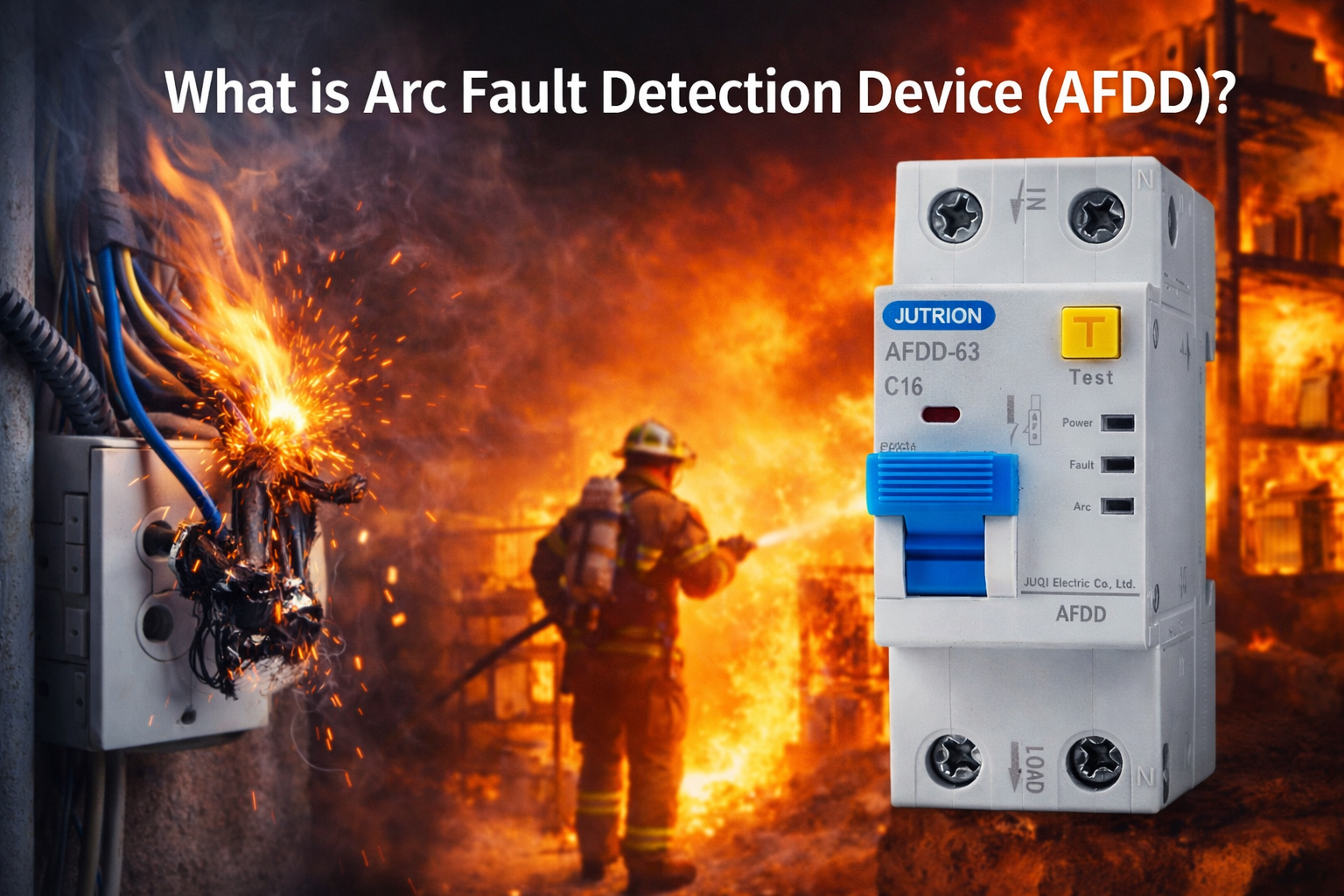
Electrical fires are a very common safety hazard in residential and industrial environments. Most of these fires are caused by arc faults.
Arc faults are usually caused by loose connections, aging insulation, or non-standard installation.
When current jumps between conductors, high-temperature arcs are generated, which can ignite surrounding combustible materials.
Traditional protection devices may not detect these faults in time. Therefore, arc fault detection devices (AFDD) are increasingly used in modern electrical distribution systems.
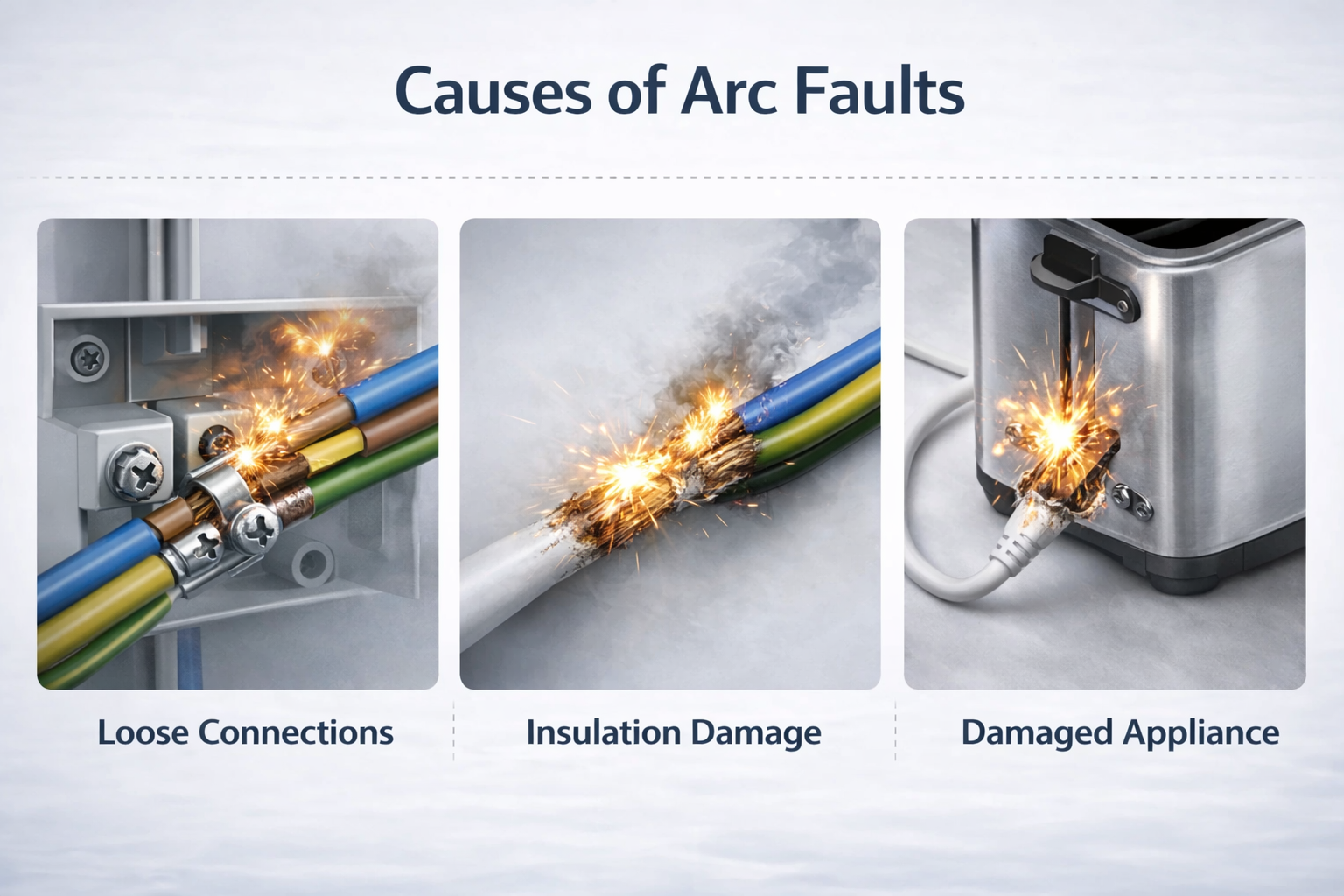 |
How Does an Arc Fault Detection Device (AFDD) Work?
The AFDD arc fault protection circuit breaker series is a product developed in accordance with the international standard IEC 62606, mainly used for detecting arc faults.
According to different models, the product can be integrated with MCB or RCBO, thereby achieving integrated protection functions such as overload, short circuit, arc fault, and leakage.
Core Working Process:
Signal Acquisition:
AFDD monitors the main circuit current in real time through built-in sensors. Some high-end models can also simultaneously collect voltage signals to improve detection accuracy.
Signal Processing:
The device analyzes the current waveform through advanced algorithms, identifying high-frequency noise, sudden amplitude changes, and abnormal waveform characteristics.
Fault Identification and Action:
By comparing with the built-in feature database, AFDD can distinguish between normal arcs and dangerous arcs. Once a dangerous arc is detected, it immediately trips to disconnect the circuit.
Status Indication and Reset:
After a fault occurs, the device indicates the fault type through indicators or codes. After troubleshooting, it can be manually reset to restore power supply
This product can effectively prevent electrical fires, provide terminal protection, and can be used in circuits in various places. When it detects an arc fault in the circuit, it can disconnect the power supply within 0.1 seconds, thereby avoiding electrical fires.
Why Choose an Arc Fault Detection Device (AFDD)?
Compared with traditional protection devices, the Arc Fault Detection Device (AFDD) is a special protection device designed for electrical fire protection, which can make up for the protection blind spots where traditional circuit breakers and leakage protection devices cannot detect arc faults.
It can monitor and identify dangerous arc faults in real time caused by loose connections, aging insulation, and non-standard wiring, and quickly disconnect the power supply before a fire forms, thereby preventing electrical fires from the source and improving the safety and reliability of the power distribution system.
MCB vs RCB vs AFDD:
MCB is the most basic and most common protective device in low-voltage power distribution. It is installed in almost all circuit loops. Its core function is to protect lines and equipment and prevent damage caused by overload and short circuit.
RCB (also known as RCD) is mainly positioned for electric shock protection, focusing on protecting personal safety. At the same time, it can also assist in preventing fires caused by some leakage currents, but it is not designed for arc faults.
AFDD is the most critical fire protection device among the three types of equipment. Its core function is to detect arc faults and prevent electrical fires, filling the protection gaps of MCB and RCB.
Comparison Table:
| Core Protection Target | MCB | RCB | AFDD |
Core Protection Target | Lines and equipment (overload, short circuit) | Personal safety (electric shock protection) | Fire safety (prevent arc fault ignition) |
Working Principle | Thermal trip (overload), magnetic trip (short circuit) | Detect imbalance between live and neutral current (leakage) | Monitor current waveform and identify arc fault characteristics |
Core Advantages | Basic protection, low cost, easy installation | Fast response, good electric shock protection | Active fire prevention, accurate identification, no blind spots |
Core Disadvantages | No leakage protection, no arc fault protection | Has short circuit protection, but no overload protection and no arc fault protection. | Has overload, short circuit, and leakage protection |
Applicable Scenarios | Basic protection for all distribution circuits | Crowded areas, humid environments, electric shock protection | Various scenarios, focusing on electrical fire prevention |
International Standard | IEC 60898 | IEC 61540 | IEC 62606 |
Through the above comparison, we can understand the protection functions and core protection targets of each product, and select the required functions for each scenario according to each product.
For places such as hotels, homestays, youth hostels, wooden buildings, and other densely populated or flammable environments, as well as factories and warehouses storing flammable materials, it is recommended to give priority to using AFDD for protection.
In these scenarios, aging lines, loose connections, or non-standard wiring are more likely to cause arc faults, and AFDD can disconnect the power supply in time before a fire occurs, thereby reducing safety risks at the source.
Summary:
In general, AFDD (Arc Fault Detection Device) has become an indispensable and important component in modern electrical systems.
Through accurate detection of arc faults and timely disconnection of the power supply, AFDD can effectively prevent electrical fires and ensure the safety of personnel and property.
FQAs:
Q:Does AFDD need to be used with other devices?
A:AFDD can be used together with MCB or RCBO. Some integrated models combine the functions of AFDD, MCB, and RCBO, providing comprehensive protection without the need for additional devices.
Q:How many times can an AFDD be used?
A:The mechanical life of AFDD can reach up to 4,000 operations, depending on the model and usage conditions.
Q:Does AFDD cause false tripping?
A:Modern AFDD devices use advanced algorithms to minimize false tripping and ensure reliable operation.
Q:Where should AFDD be installed?
A:AFDD is typically installed in distribution boards, especially in final circuits such as socket outlets and residential circuits
-
What Is a Surge Protective Device?
2025-10-29 11:05:09 -
How Can a Miniature Circuit Breaker Achieve Remote ON/OFF Control?
2025-12-29 11:05:09 -
How to Select the Right AC Contactor for Electrical Systems?
2026-01-29 20:26:49 -
What Is an Automatic Transfer Switch (ATS) and How to Select the Right One?
2025-11-02 11:05:09 -
What Is an Arc Fault Protection Device?
2026-03-18 00:00:24