



How to Select the Right AC Contactor for Electrical Systems?
#Industry information ·2026-01-29 20:26:49
How to Select the Right AC Contactor for Electrical Systems?
What Is an AC Contactor?
An AC contactor is an electromagnetic automatic switch commonly used in low-voltage distribution cabinets. It is widely applied for frequent start-stop control of equipment such as low-voltage distribution cabinets, three-phase motors, water pumps, fans, and automation control cabinets.It controls the on and off of a high-current main circuit through a small-current coil, and has functions such as undervoltage protection, safety isolation, and remote automatic control. It is a core component in industrial electrical control systems.
Why Use an AC Contactor?
In modern electrical control systems, compared with ordinary switches, AC contactors can use a smaller current to control a larger load current, thereby achieving remote control and automated control.Using AC contactors can provide higher safety and reliability for electrical systems.Since many devices require frequent start and stop operations, using ordinary switches may lead to low efficiency and easily damage equipment. However, AC contactors are specially designed for frequent operations and have higher mechanical life and electrical life.
How Should We Select an AC Contactor in Complex Application Scenarios?
When selecting an AC contactor for power systems, we need to consider several key factors to ensure reliable operation and a long service life of the equipment.The rated current of the AC contactor should correspond to the load current of the equipment, or be slightly higher than the load current.When the starting current of a motor is too high, it is usually necessary to select an AC contactor with a higher rated current.Different application scenarios require different types of AC contactors.
Application Scenarios
Motor Control Circuit:
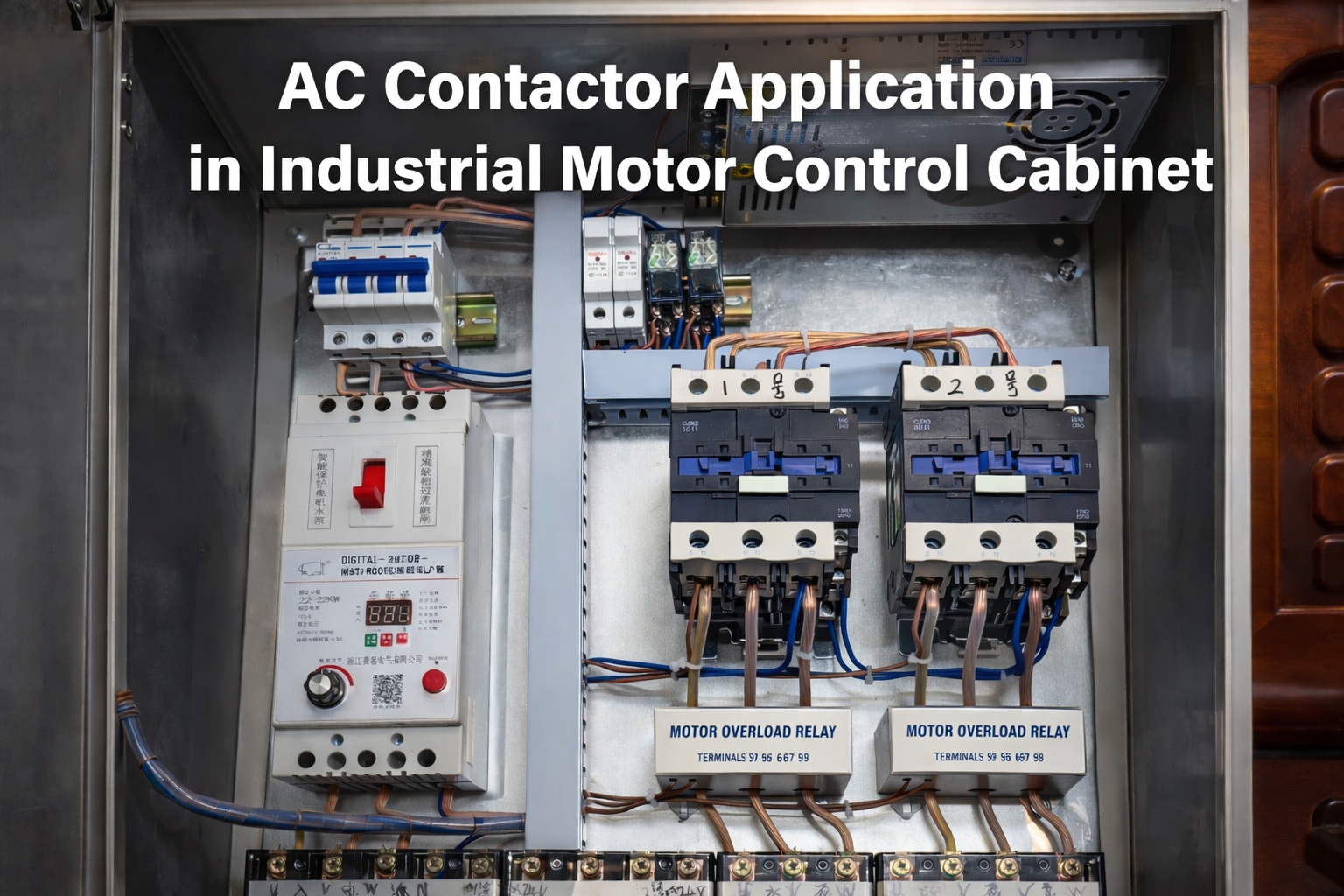
In this scenario, the rated current of the AC contactor should be selected according to the rated current of the motor. It is recommended to select a contactor with a rated current of 1.2–1.5 times the motor rated current to cope with the large inrush current generated when the motor starts.The rated voltage of the contactor needs to match the system voltage, and 380V is commonly used in industrial motor control systems.The coil voltage of the contactor needs to match the control circuit, such as 24V, 110V, or 220V.It is also necessary to consider the operating frequency and start-stop times of the motor. For motors that start and stop frequently, contactors with higher electrical life should be selected.AC contactors are generally used together with circuit breakers and thermal overload relays to provide overload, short-circuit, and operating condition protection, which can effectively improve the safety and stability of the entire electrical system.
Automation Control Cabinet:
In automation control cabinets, AC contactors are usually triggered by control signals such as PLC, relays, or push button switches.When the control signal is connected, the contactor coil is energized and the main contacts close, thereby connecting the main circuit to achieve remote control and automated operation.This control method can improve system reliability as well as centralized control and intelligent management.
- Lighting System:
In large commercial buildings, factories, parking lots, and other public facilities, AC contactors are often used for centralized control of lighting systems.Through AC contactors, multiple groups of lighting fixtures can be switched on and off at the same time to achieve unified management.In lighting systems, contactors are usually triggered by push button switches, timers, or automatic control systems.When the control system signal is connected, the contactor coil is energized, the main contacts close, the lighting circuit is connected, and the lamps begin to operate.This control method reduces manual operation and improves the management efficiency of the lighting system, so it is widely used in the above scenarios
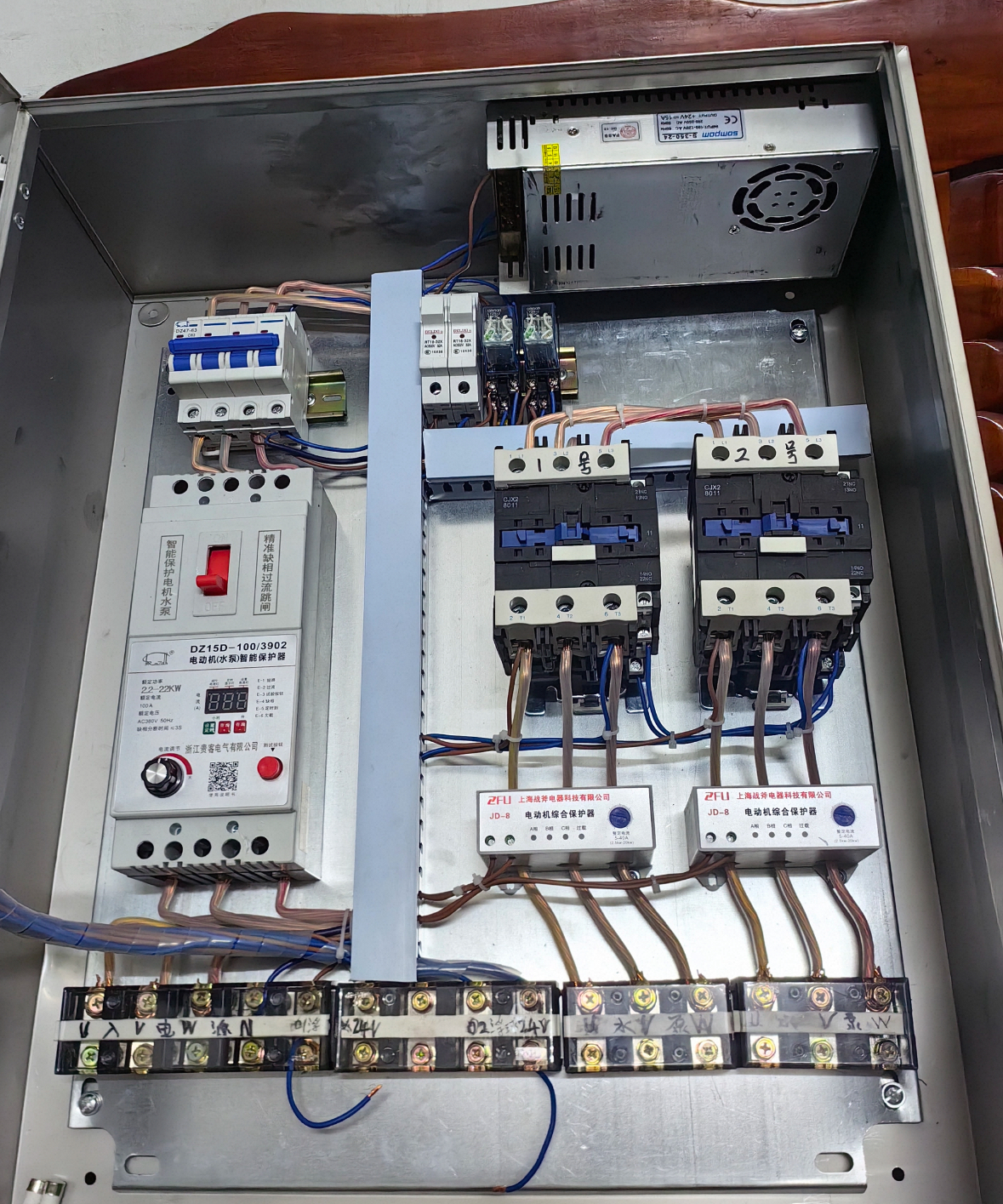
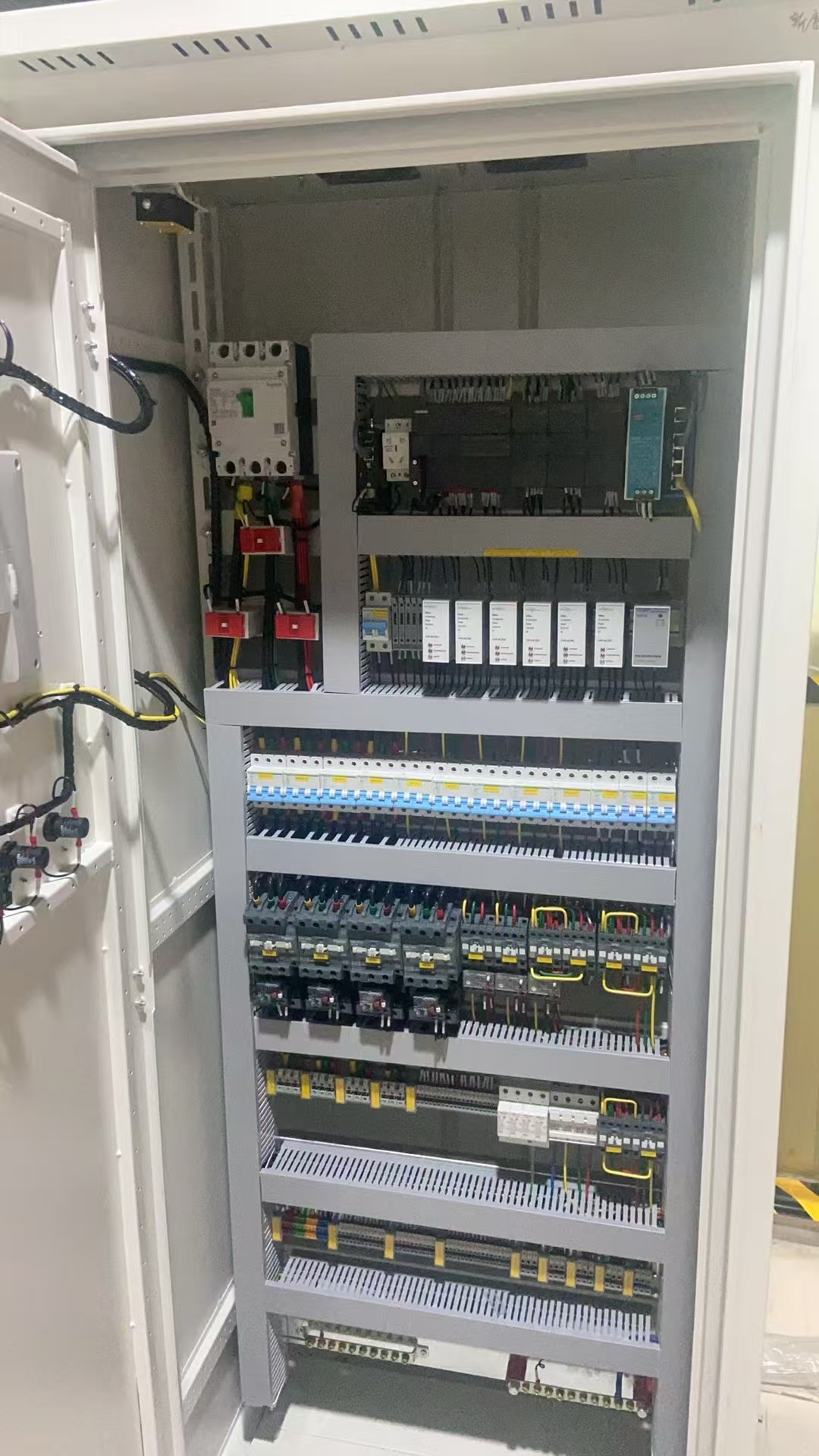
Application Example Image:
 |  |
FAQs:
Q: How long is the service life of an AC contactor?
A: Under no-load conditions, the opening and closing service life is more than 10 million operations; under load conditions, the closing service life is about 500,000–1,000,000 operations, and the specific service life depends on the actual usage conditions and operating environment.
Q: Does a contactor need to be used with other products?
A: It must be used together with circuit breakers, MCBs, and thermal overload relays. The contactor is only responsible for switching and does not provide short-circuit protection and other protection functions.
Q: What conditions are required when used together with PLC control?
A: In a PLC control system, the AC contactor must match the PLC output control voltage. If the PLC output is 24V, the contactor coil also needs to select 24V control voltage. The AC contactor needs to be used together with circuit breakers and thermal relays to prevent overloads, short circuits, and other conditions from damaging the system.
-
What Is a Surge Protective Device?
2025-10-29 11:05:09 -
How Can a Miniature Circuit Breaker Achieve Remote ON/OFF Control?
2025-12-29 11:05:09 -
How to Select the Right AC Contactor for Electrical Systems?
2026-01-29 20:26:49 -
What Is an Automatic Transfer Switch (ATS) and How to Select the Right One?
2025-11-02 11:05:09 -
What Is an Arc Fault Protection Device?
2026-03-18 00:00:24