



Understanding Motorized Operating Mechanisms in MCCB Applications
#Industry information ·2026-01-24 22:19:02
Practical Issues Faced by MCCBs in Traditional Power Distribution Systems
In traditional power distribution systems, a series of practical issues are often encountered. For example, when the number of devices is large and installation locations are widely distributed, MCCB opening and closing operations usually rely on manual operation. This not only makes operation cumbersome, but also results in slow response speed in emergency situations, significantly reducing overall operation and maintenance efficiency.At the same time, when the system experiences overvoltage, overload, or requires emergency power disconnection, the limitations of manual operation are further amplified.In medium-voltage or high-current application scenarios, as the rated current level of the MCCB increases, the operating torque required increases significantly, making the opening and closing process more difficult.Under such conditions, forced manual operation is not only inefficient, but also poses obvious safety risks. Especially in high-load or live-operation environments, it can easily threaten the personal safety of operation and maintenance personnel.With the continuous improvement of intelligence and electrical automation levels, traditional manual operation methods have gradually become unable to meet the modern power distribution system’s requirements for safety, reliability, and response speed.Therefore, how to improve the operational convenience of MCCBs and achieve safe, efficient, and remotely controllable opening and closing methods has become an important issue that urgently needs to be addressed in modern power distribution system design.
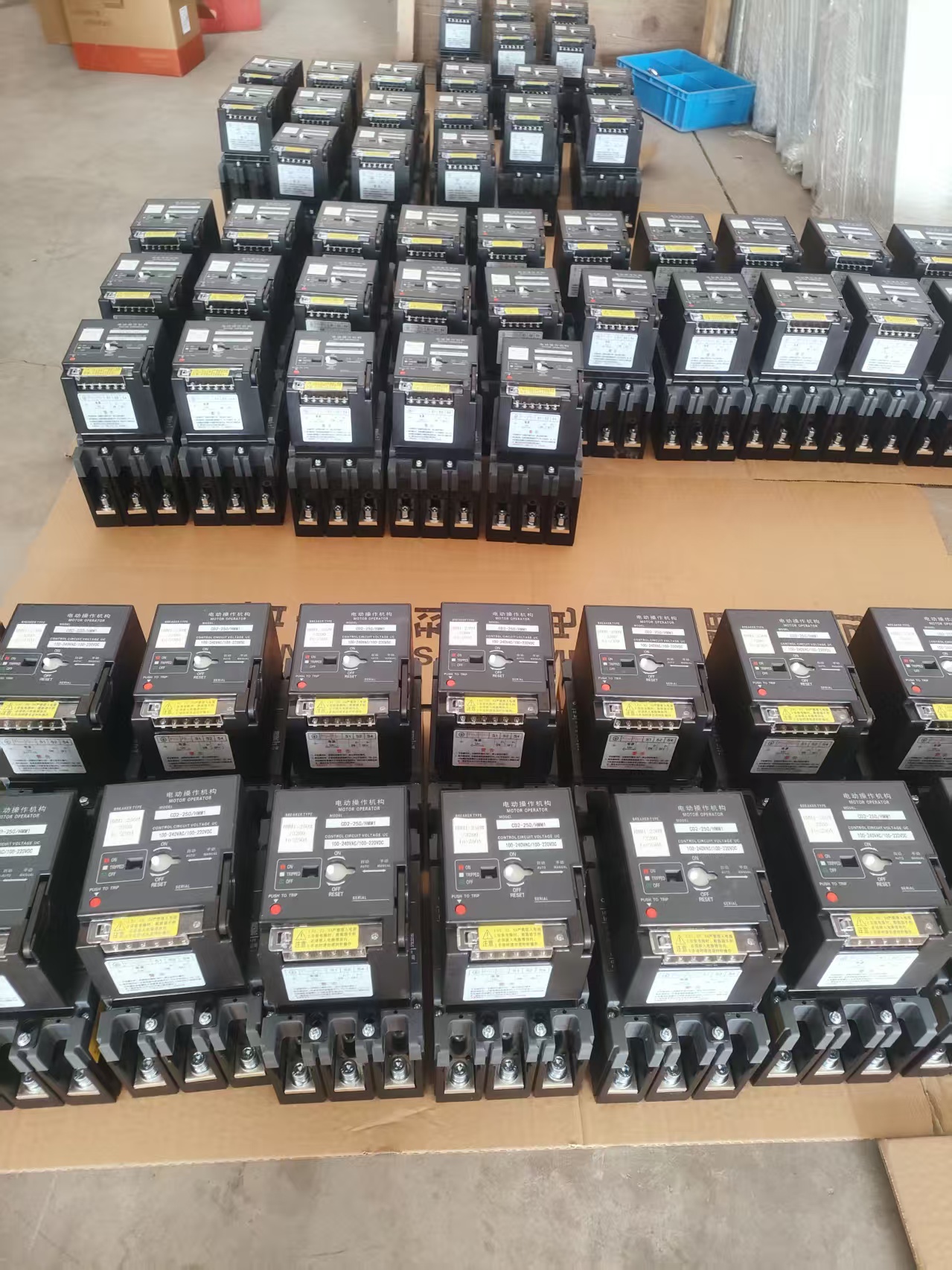 | 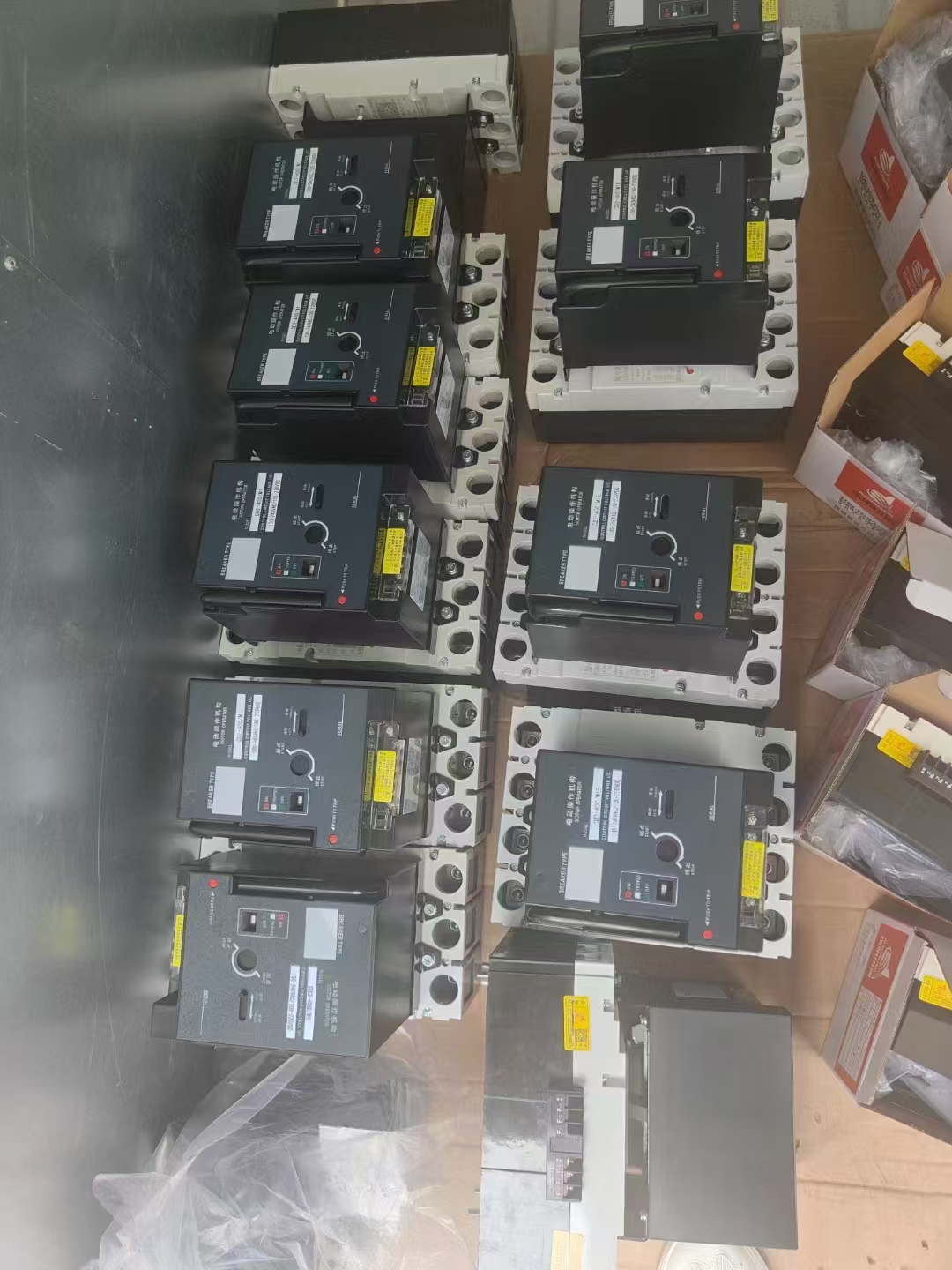 | 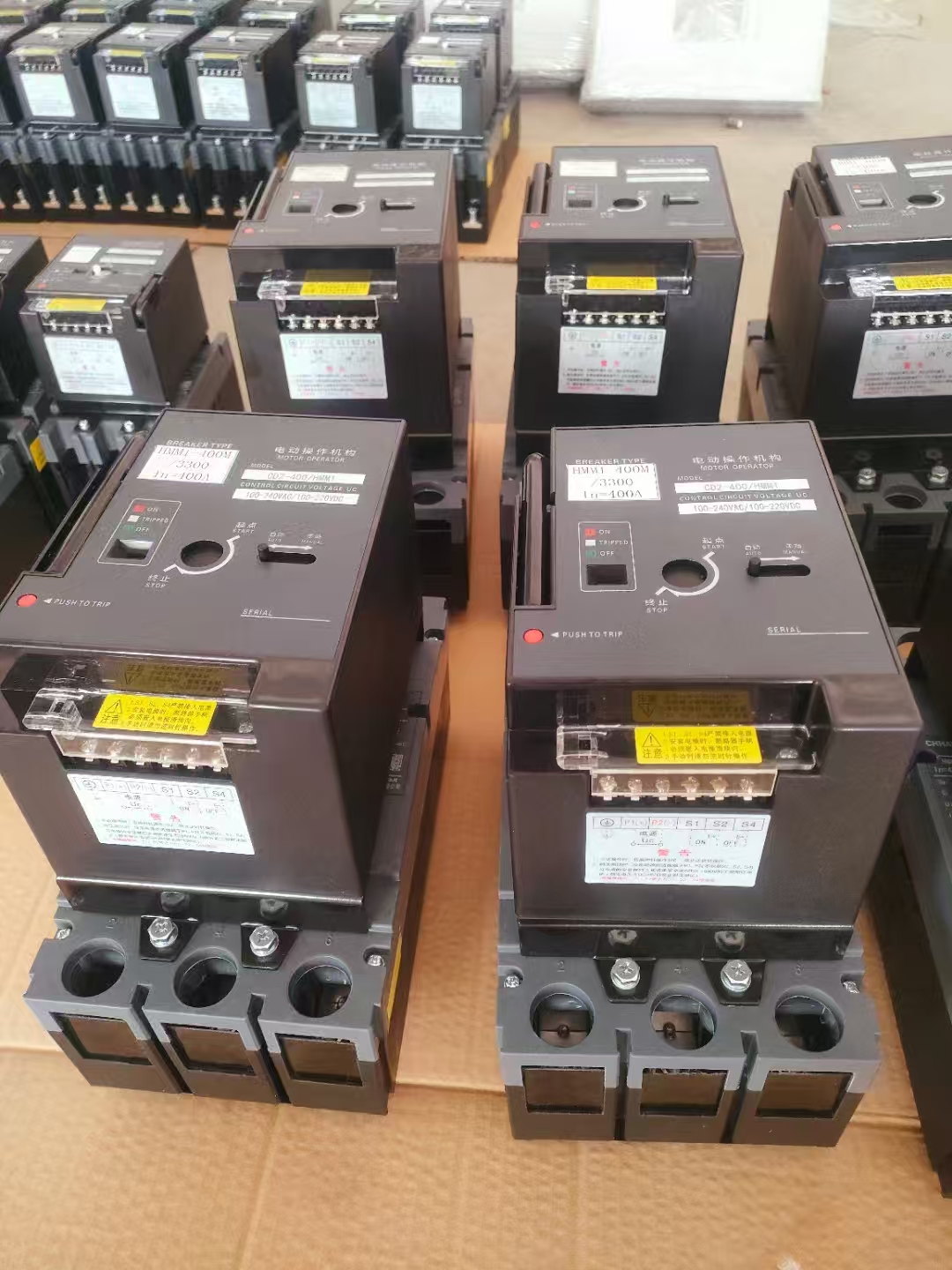 |
What Is a Motorized Operating Mechanism for MCCB?
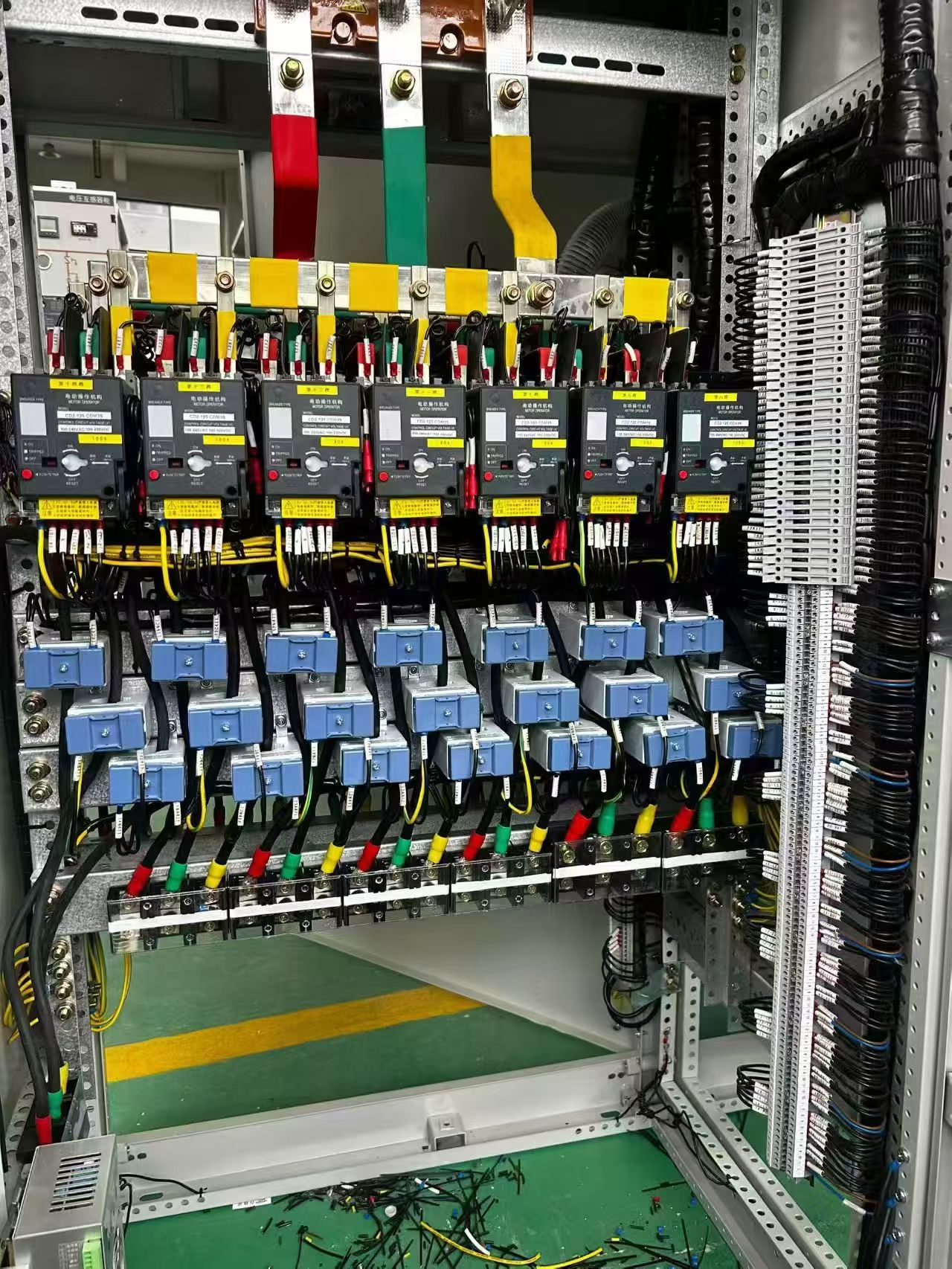
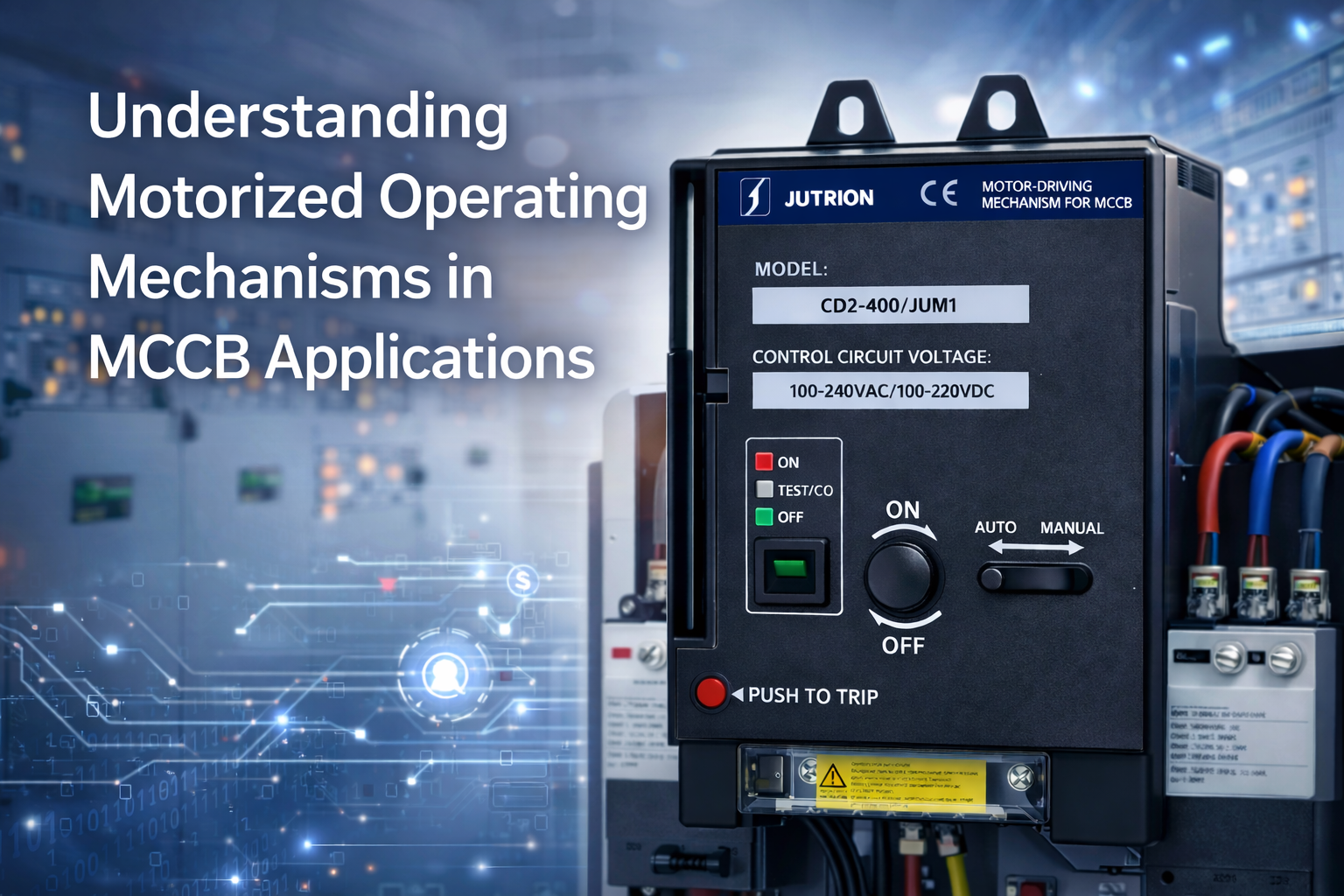
A motorized operating mechanism is an accessory designed for use with an MCCB, enabling electric ON/OFF control of switching devices inside distribution panels.Its core function is to convert electrical energy into mechanical motion through an internal motor and transmission structure.After receiving a control signal, a compact permanent-magnet DC motor drives the operating shaft, which in turn actuates the MCCB operating handle to complete the closing or opening operation.This mechanism is compatible with MCCBs rated from 63A to 1600A.During operation, manual operation of the MCCB is not required, allowing stable, reliable, and repeatable remote ON/OFF control.
Support for Multiple Control and Communication Methods
In practical applications, motorized operating mechanisms are not limited to local operation only. They can also be integrated with multiple control modes according to project requirements, in order to meet the automation and remote management needs of different power distribution systems.
Common Control Methods:
Local Button or Control Signal Triggered Opening and Closing
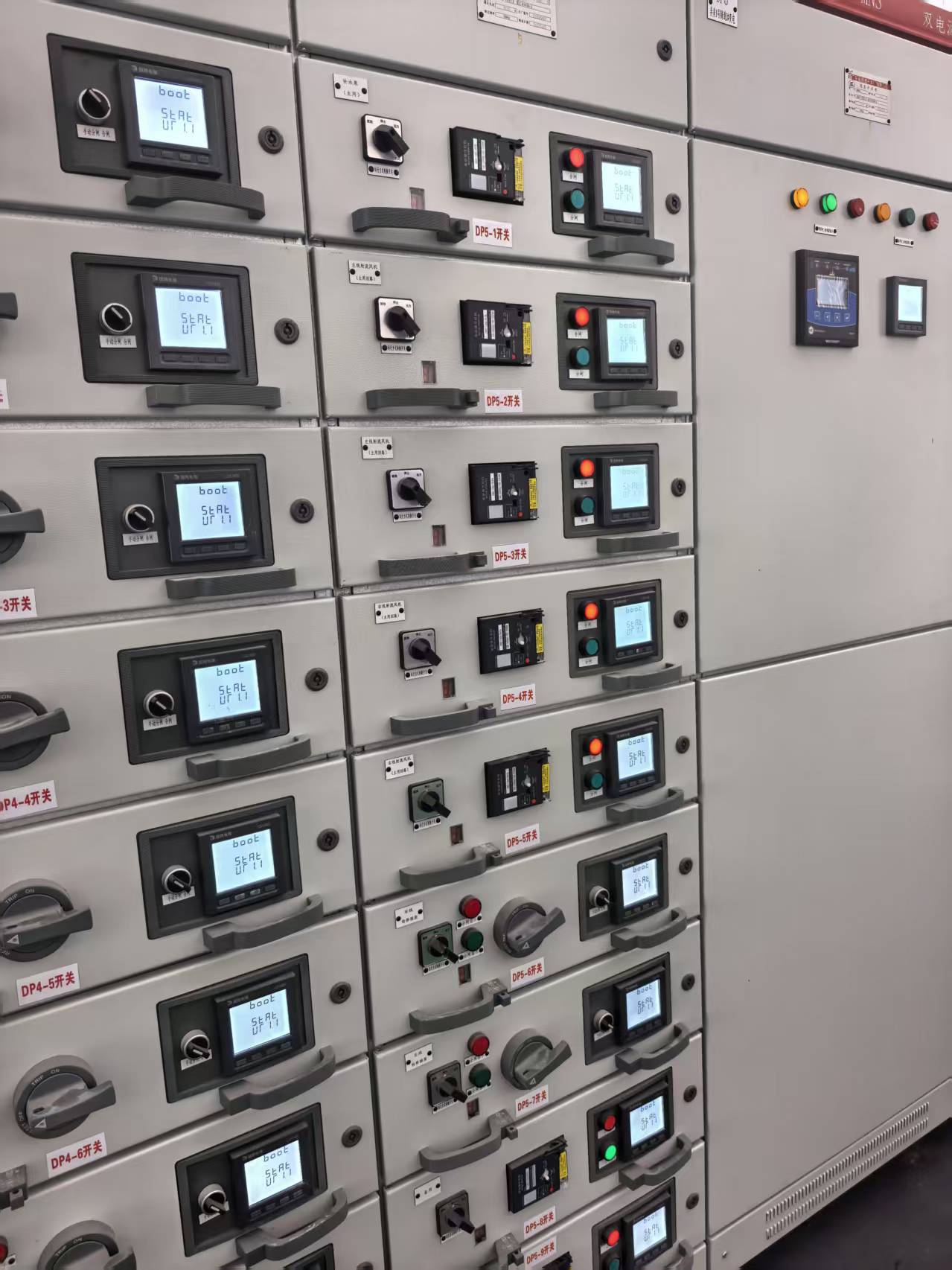
- Operation of the motorized operating mechanism via the panel of a low-voltage distribution cabinet is the most commonly used control method on site. The panel integrates operating buttons, status indicators, and fault indication elements. This method is intuitive to operate and has higher priority than remote control, making it suitable for daily operation and maintenance as well as emergency fault handling scenarios.This control method allows power opening and closing to be performed directly outside the cabinet, avoiding the risk of electric shock caused by misoperation when opening the cabinet door manually.
- Remote Control Signal Triggered Opening and Closin Multiple Power Distribution Scenarios
Large Industrial Plants:
In this scenario, there are numerous power distribution circuits, with points distributed across various production workshops and warehouses. Traditional manual inspection requires checking each point one by one, which is time-consuming, labor-intensive, and prone to missing potential hazards.
Commercial Buildings:
This scenario includes office buildings, shopping malls, hotels, and similar facilities. Power distribution points are numerous and dispersed across equipment shafts and strong and weak current rooms, involving multiple types of loads and complex operation and maintenance requirements.Data Centers:
As core facilities for computing power and information processing, data centers have extremely high requirements for power supply stability and continuity. Power distribution equipment is highly concentrated, and once voltage or current abnormalities occur, failure to perform power isolation in a timely manner may result in equipment damage, business interruption, or even data loss.Outdoor Remote Sites:
In this scenario, power distribution equipment is installed at outdoor sites located far away. Operation and maintenance personnel are required to travel back and forth frequently. Due to remote locations and exposure to harsh weather conditions, maintenance costs are high, and failure to respond in time may lead to equipment faults and power supply interruptions.Moreover, manual operation in extreme environments in remote areas makes it difficult to ensure personnel safety.
- Fire Protection and Emergency Linkage:
In this scenario, during highly urgent situations, operation and maintenance personnel are required to perform manual operations on site. Immediate response cannot be achieved, emergency response is slow, accidents are likely to escalate, and there is no effective protection for the safety of operation and maintenance personnel.
Solutions for the Above Scenarios:
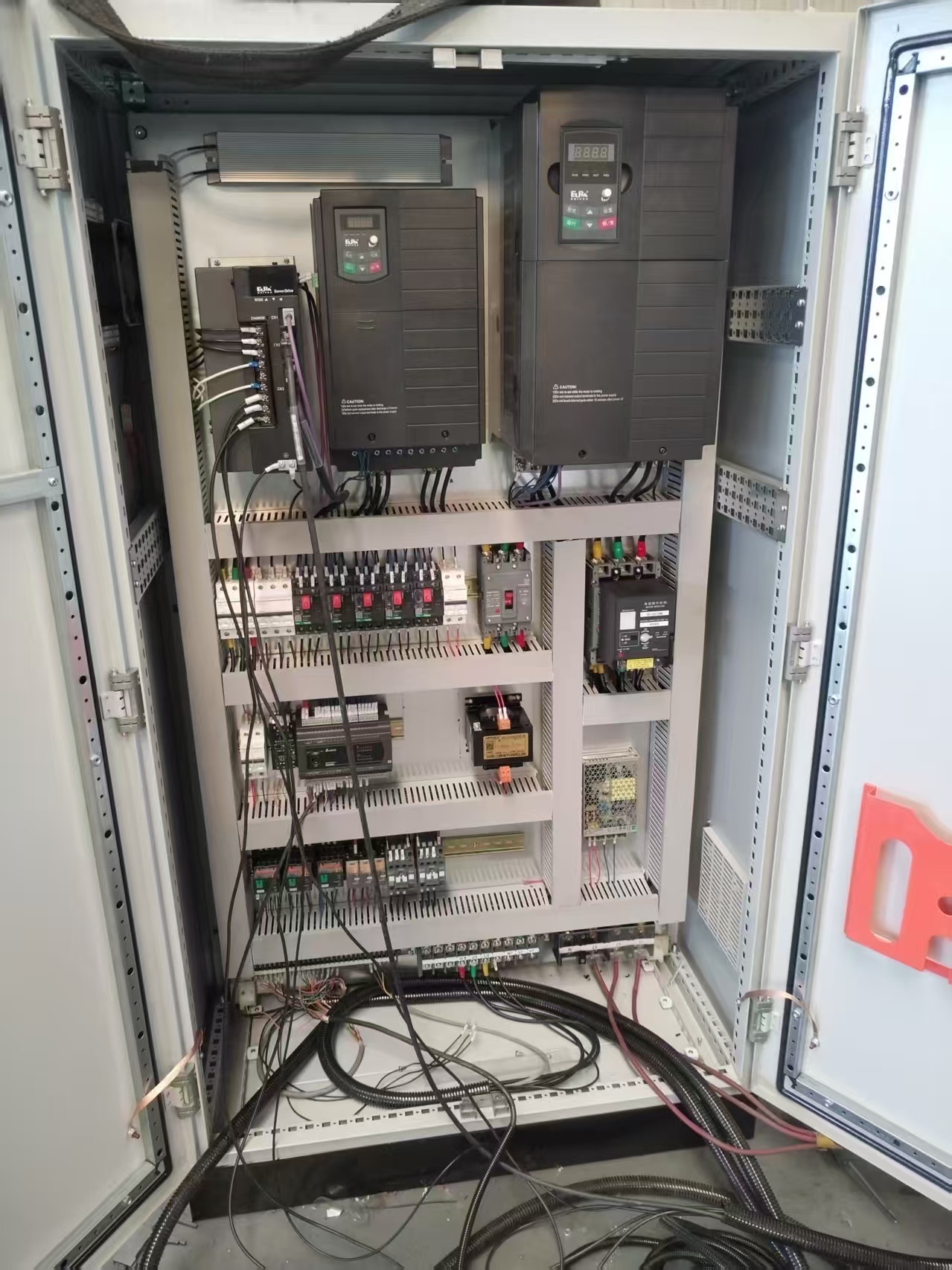
This solution is based on the coordination of PLC and RS-485. The PLC serves as the on-site control core, responsible for collecting the operating status of MCCBs, motorized operating mechanisms, and other power distribution equipment. When voltage or current abnormalities occur, the system rapidly controls opening and closing operations according to preset parameters to prevent fault escalation.distance data exchange, enabling unified management of multiple circuits and multiple points.Through the RS-485 communication bus, the PLC can perform long-distance data exchange among multiple terminal devices, enabling unified management of multiple circuits and multiple points.This effectively solves problems such as dispersed distribution points, slow manual response, and high risks associated with manual operation under harsh conditions in traditional power distribution systems, providing a reliable control foundation for power distribution operation and maintenance across multiple scenarios.
Various Application Scenarios
Conventional Low-Voltage Power Distribution Applications:
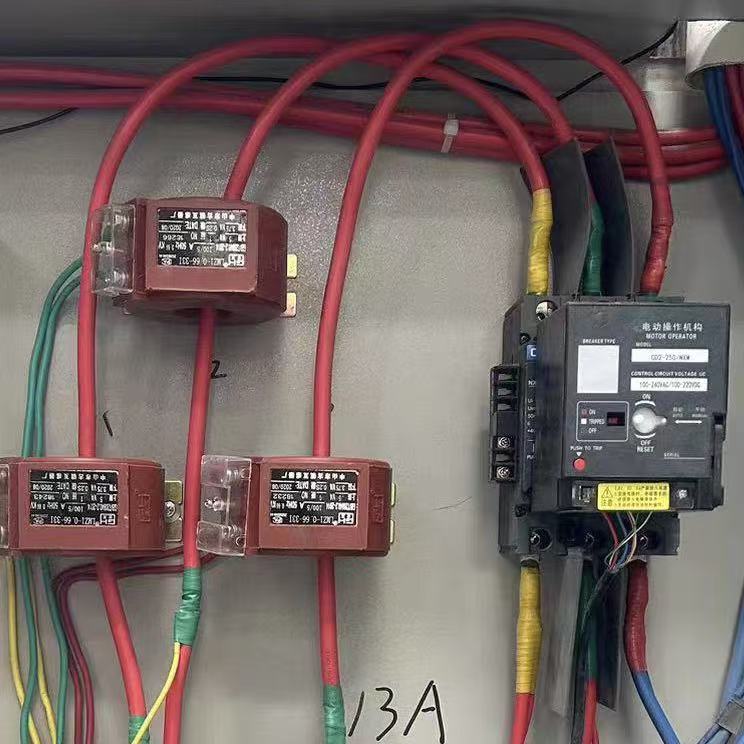
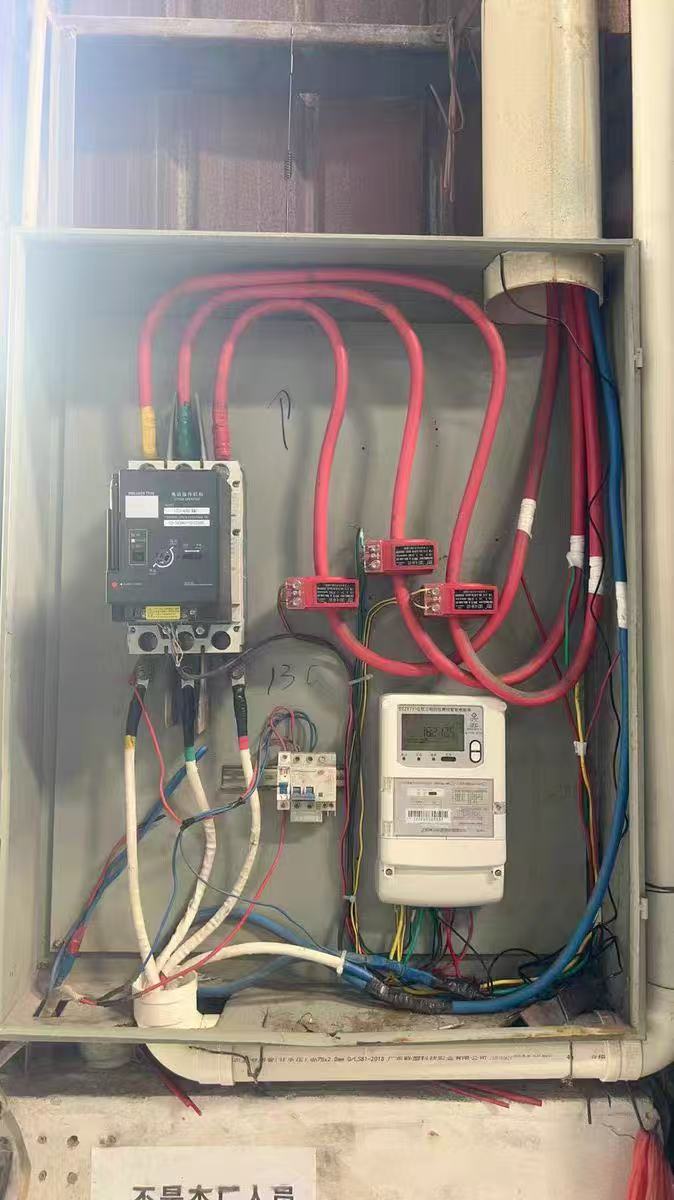
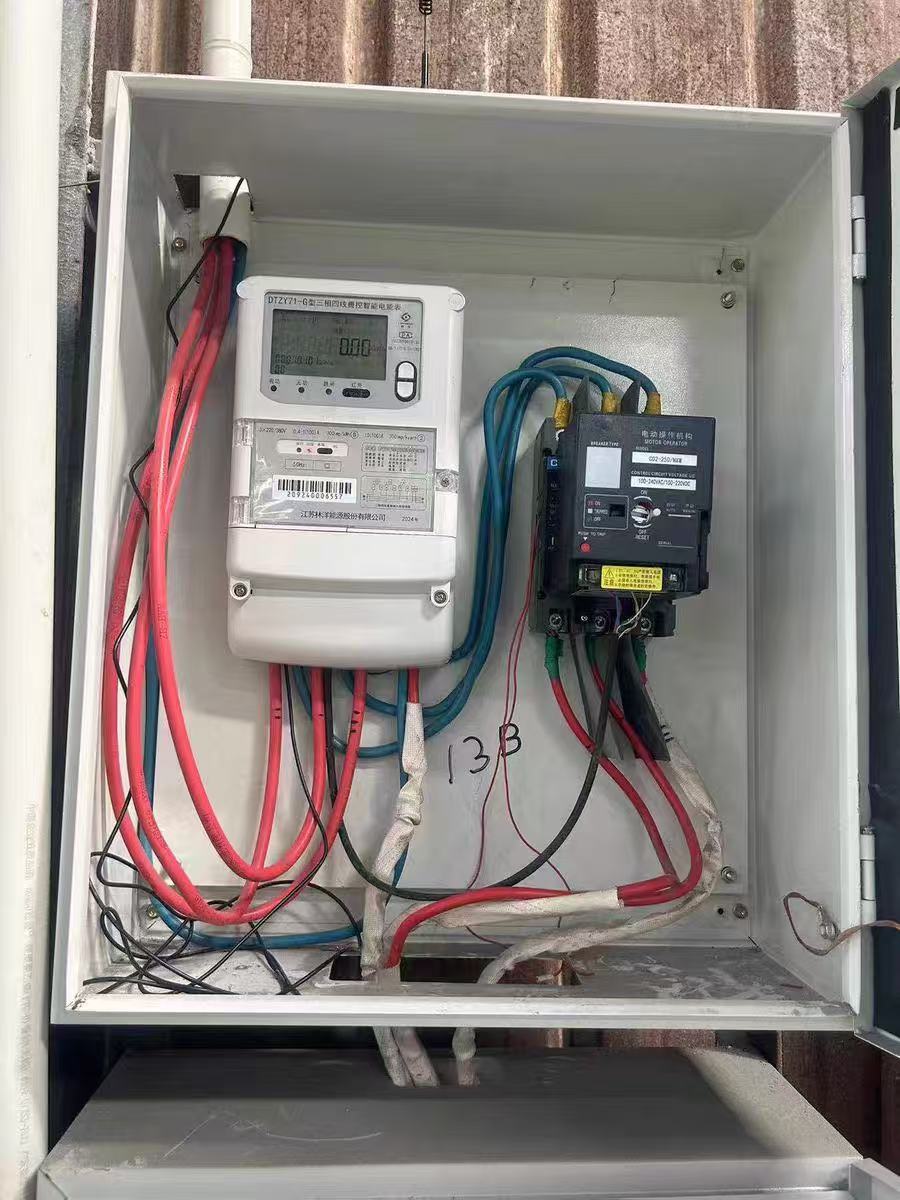
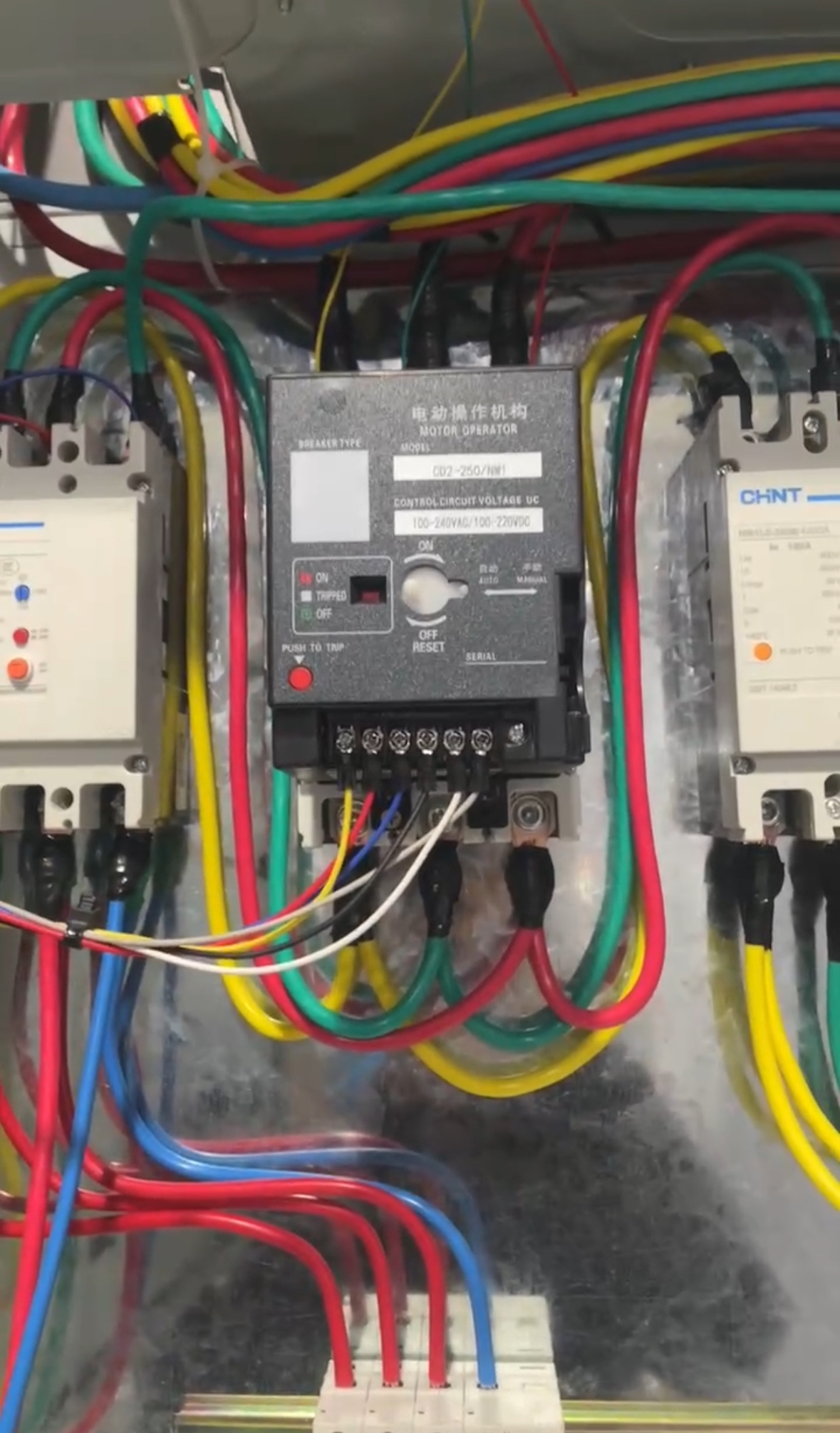
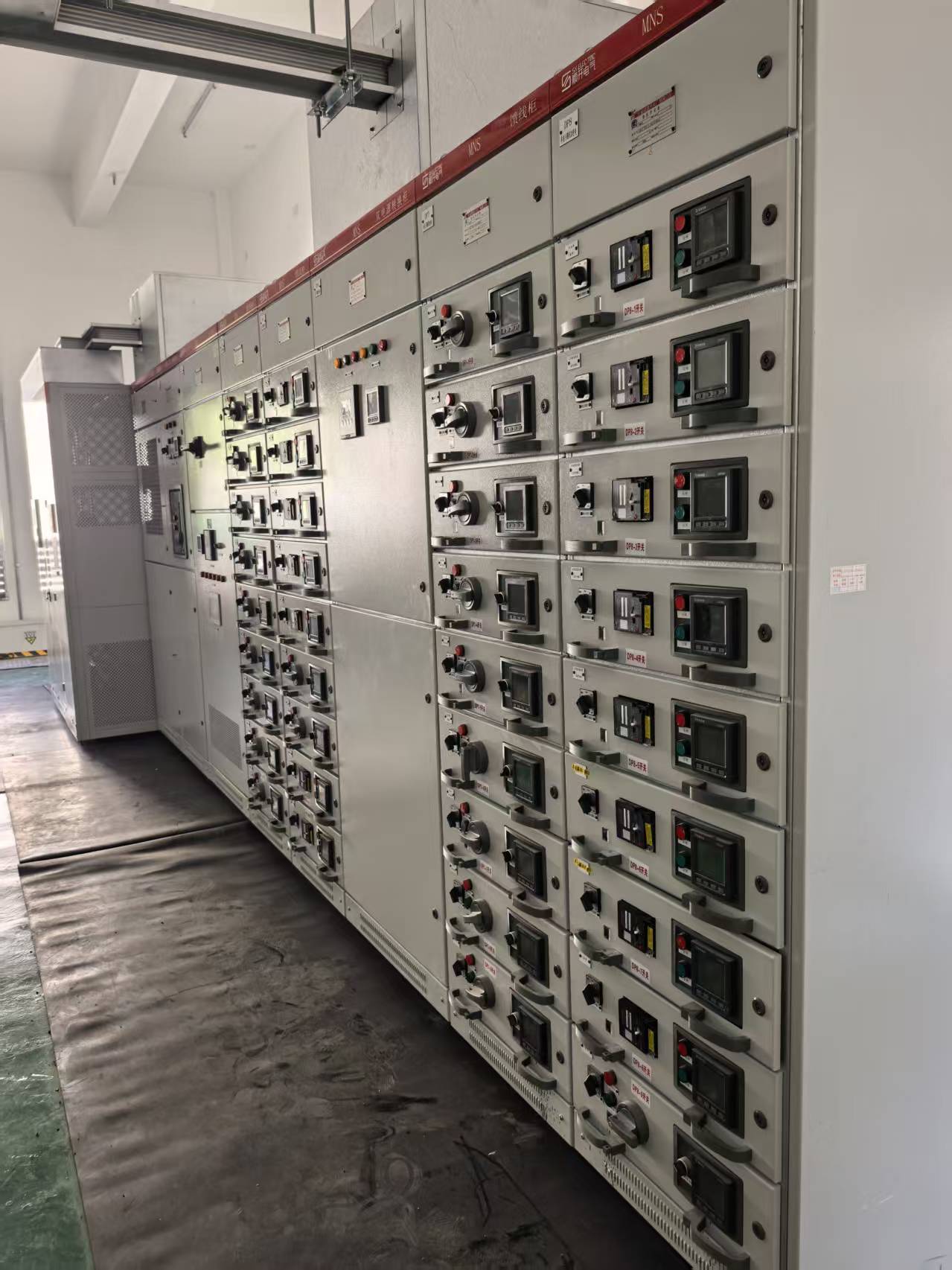
This type of application is commonly found in small factories, commercial facilities, equipment rooms, and standard low-voltage distribution cabinets.MCCBs are mainly used for basic circuit protection, metering, and load control.By installing a motorized operating mechanism, remote or local electric ON/OFF operation can be realized without opening the cabinet door.This helps reduce the frequency of manual operation, improve operation and maintenance efficiency, and enhance operational safety.At the same time, it also reserves control interfaces for future automation upgrades of the power distribution system.
 |  |
 |  |
Manufacturing System Power Distribution Scenario:
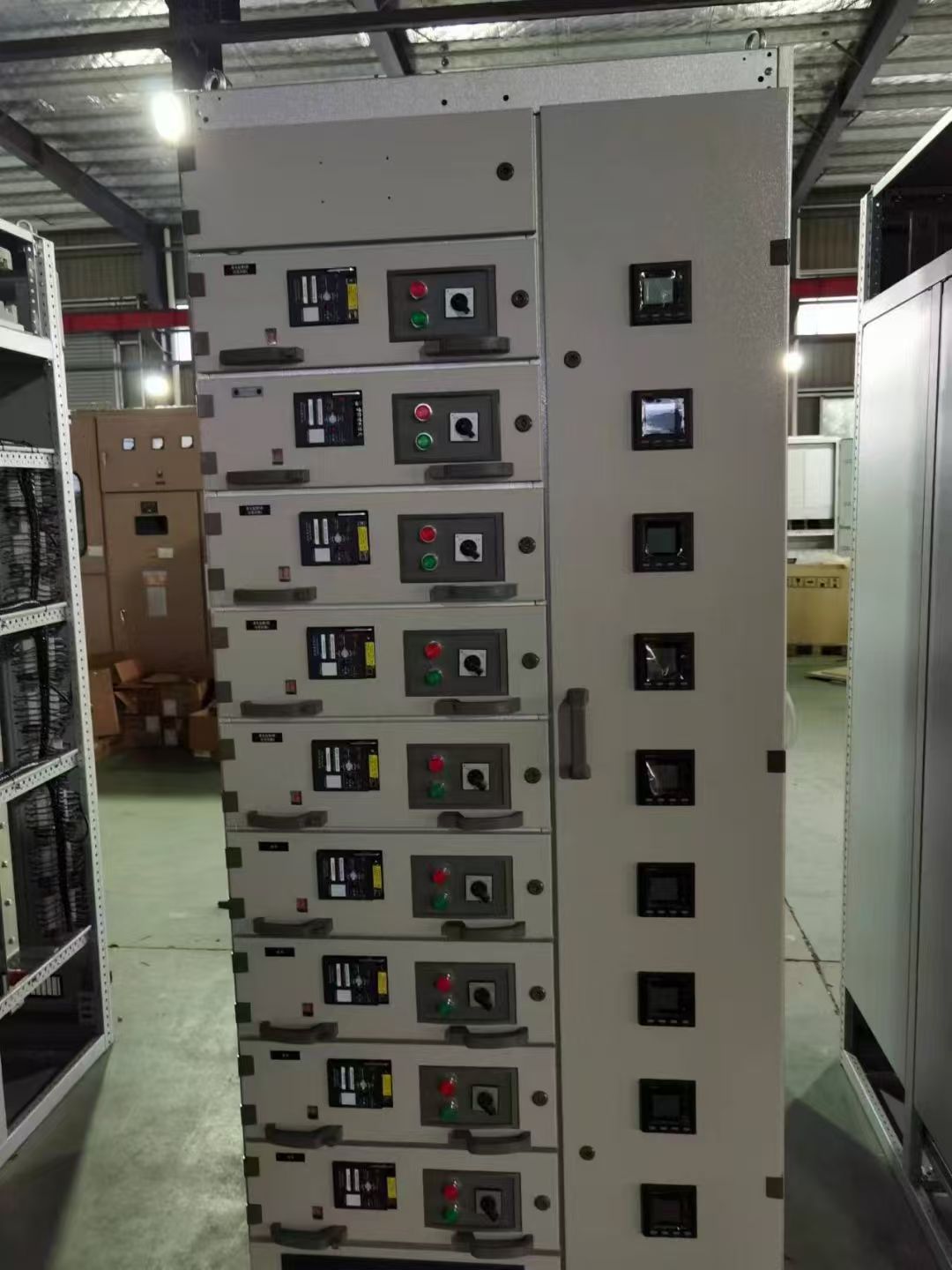
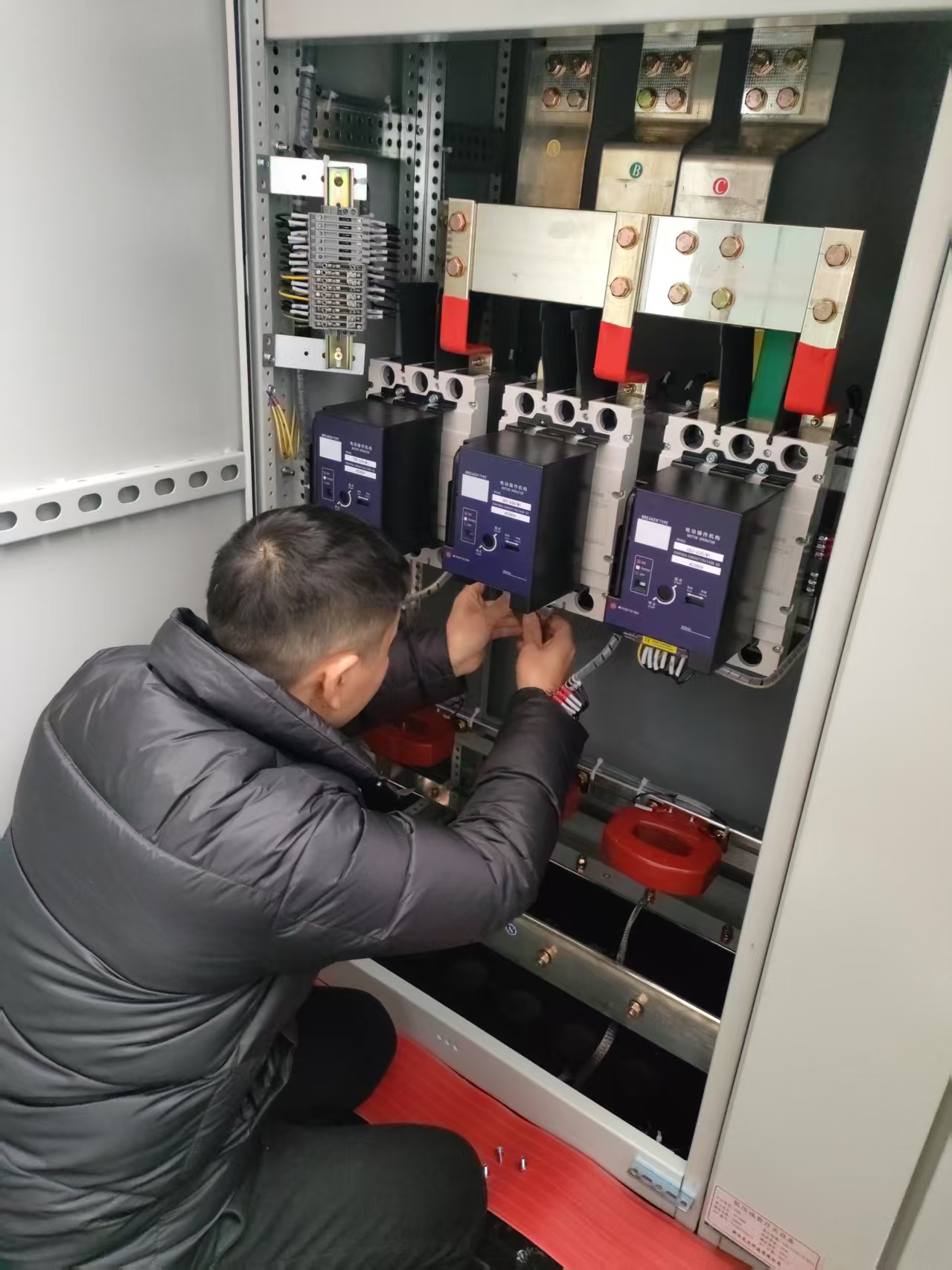
In industrial plants and manufacturing systems, MCCBs are commonly used in main distribution panels and sub-distribution boards.Due to the high current rating of MCCBs, a greater operating torque is required, making manual ON/OFF operation difficult.By installing a motorized operating mechanism, remote closing and opening control of the circuit breaker can be achieved.This helps avoid potential accidents caused by manual operation that requires opening the cabinet door.
 |  |
 |  |
 |  |
Performance Parameters:
| Rated Operating Voltage | DC 24V,DC36V, AC 110V / DC 110V, AC 230V / DC 220V, AC380V,AC 400V |
Rated Insulation Voltage | 250V; when the rated operating voltage is 400V, the insulation voltage is 500V |
AC Voltage Frequency | 50Hz / 60Hz |
| Rated Duty | Short-time duty |
| Operating Time | 0.7 – 1.5 s |
| Power Frequency Withstand Voltag | 1890V, 5 s |
| Operating Temperature | -5 to +40°C |
| Heat Resistance | 50°C, 90% humidity |
Conclusion
Compared with traditional manual operation, the panel operation mode of the motorized operating mechanism enables opening and closing control to be performed outside the cabinet. It integrates opening and closing buttons, operating status indication, and fault indication functions. The operation is intuitive and responsive, making it suitable for daily on-site operation and maintenance, while allowing personnel to avoid the risk of electric shock caused by opening the panel to operate the MCCB.The remote control mode of the motorized operating mechanism allows MCCB opening and closing to be achieved without operation and maintenance personnel being present on site, especially in centralized, automated, elevated installation, or space-restricted scenarios. It effectively improves fault response speed. Through coordination between PLCs, other control terminals, and communication systems, real-time monitoring of voltage, current, and equipment status is achieved. In abnormal conditions, signals are promptly fed back and control commands are executed to enable rapid opening and closing, prevent fault escalation, and enhance the safety and reliability of power distribution system operation.
FAQs:
| Q:Can the motorized operating mechanism be adapted to different breaker brands? |
| A:Yes. The motorized operating mechanism can be adapted to most mainstream MCCBs on the market. For MCCBs with special or differentiated structures, customization and sample development can be provided. |
| Q:Will the installation of the motorized operating mechanism affect normal manual opening and closing? |
| A:No. In the absence of power supply or under system abnormal conditions, the motorized operating mechanism retains manual operation capability and is equipped with a manual operating handle, allowing personnel to perform manual opening and closing when required. |
| Q:Can the motorized operating mechanism operate normally under low-voltage conditions? |
| A:Yes. Under low-voltage conditions, appropriate voltage models can be selected,including 12V, 24V, 36V, 220V, and 380V. Other voltage specifications can also be customized to ensure stable and reliable operation under different conditions. |
| Q: Does the motorized operating mechanism have relevant certifications? |
| A: The motorized operating mechanism can provide relevant product testing and certification support according to different market requirements and project needs. Common certifications include CE and RoHS, and the product is designed and tested in accordance with relevant IEC standards, facilitating application in different countries and regions. |
| Q: Do you support OEM / customization? |
| A: Yes. We support OEM and customization services. Customized solutions can be provided according to customer requirements, including appearance branding, product parameters, voltage specifications, and control methods. |
-
What Is a Surge Protective Device?
2025-12-29 11:05:09 -
How Can a Miniature Circuit Breaker Achieve Remote ON/OFF Control?
2025-12-29 11:05:09 -
How to Select the Right AC Contactor for Electrical Systems?
2025-12-29 11:05:09 -
What Is an Automatic Transfer Switch (ATS) and How to Select the Right One?
2025-12-29 11:05:09 -
Understanding Motorized Operating Mechanisms in MCCB Applications
2026-01-24 22:19:02