


What Is an Automatic Transfer Switch (ATS) and How to Select the Right One?
#Industry information ·2025-12-29 11:05:09
What Is an Automatic Transfer Switch (ATS) and How to Select the Right One?
Power outages are a very common and serious problem in power supply systems, especially in industrial and commercial applications. Unexpected power failures can lead to production interruptions, data loss, equipment damage, and significant economic losses. To ensure the stability of power supply, the Automatic Transfer Switch (ATS) is widely used between the main power source and the backup power source. When a fault occurs in the main power supply, the ATS automatically switches the load to the backup power source. Once the main power supply is restored, the system can switch back to the main power source again. Therefore, ATS plays a very critical role in various power distribution systems.
Basic Knowledge of Automatic Transfer Switch (ATS)
An Automatic Transfer Switch (ATS) is an intelligent switching device that integrates the switching body and logical control system into one unit. It can automatically and reliably switch between the main power supply and the backup power supply without the need for an external controller.
Through the dual design of electrical interlocking and mechanical interlocking, it prevents misoperation and the risk of parallel connection between two power sources, thereby improving the safety level of the system.
This product is designed for engineering projects that require high levels of power supply continuity, safety, and reliability, effectively reducing system complexity and long-term maintenance costs.
Core Functions:
The ATS is equipped with voltage detection and frequency detection functions, allowing it to accurately determine the status of the power supply.This ensures reliable switching conditions and clear control logic.
Multiple Control Methods:
The ATS supports multiple operation modes, including automatic control, electric remote control, and emergency manual control.These functions meet the dual requirements of normal operation and emergency operation.
Operating Mechanism:
The operation is managed by a control panel and multiple control commands to coordinate the motor and gearbox mechanism.The motor drives the spring-energy storage switching mechanism, allowing energy to be released instantly during switching to achieve fast power transfer.The device also provides visual switch status indication, making it convenient for on-site operation, maintenance, and safety confirmation.
Application Scenarios of Automatic Transfer Switch (ATS)
1. Residential Buildings
It is commonly used in residential communities, apartment buildings, and similar environments. ATS is usually installed in residential distribution boxes or public distribution cabinets. When the main power supply fails or is interrupted, the ATS can automatically switch to a backup power source, such as a secondary utility power line or a generator, reducing the need for manual intervention.The loads protected by ATS mainly include elevator systems, public area lighting, emergency fire lighting, domestic water pumps, and some important socket circuits.For villas or high-end residences, it can also be used to supply power to smart home systems, security monitoring, and network equipment.In these applications, the required current rating is generally not very high, but there are certain requirements for compact size, reliability, and switching stability.
2. Commercial Buildings
It is widely used in commercial environments such as shopping malls, office buildings, and hotels. In these locations, the power system is complex and the number of occupants is large. A power outage may seriously affect operational safety and cause significant economic losses.In such scenarios, ATS mainly ensures continuous power supply for central air conditioning systems, elevators, lighting systems, security monitoring systems, weak-current systems, and information equipment.The ATS can complete the power transfer within a very short time, ensuring the continuous operation of critical systems.
3. Industrial and Renewable Energy Systems
In industrial production and renewable energy systems, the Automatic Transfer Switch (ATS) ensures production continuity and the stability of power supply systems.It enables power switching between the utility grid, photovoltaic inverters, and energy storage systems, improving overall power supply flexibility and system stability.It can also be used together with protection devices such as MCCB and ACB to ensure the long-term stable operation of industrial and renewable energy distribution systems.
From the above application scenarios, the Automatic Transfer Switch (ATS) plays a crucial role in residential buildings, commercial buildings, and industrial as well as renewable energy systems.
Typical Application Examples
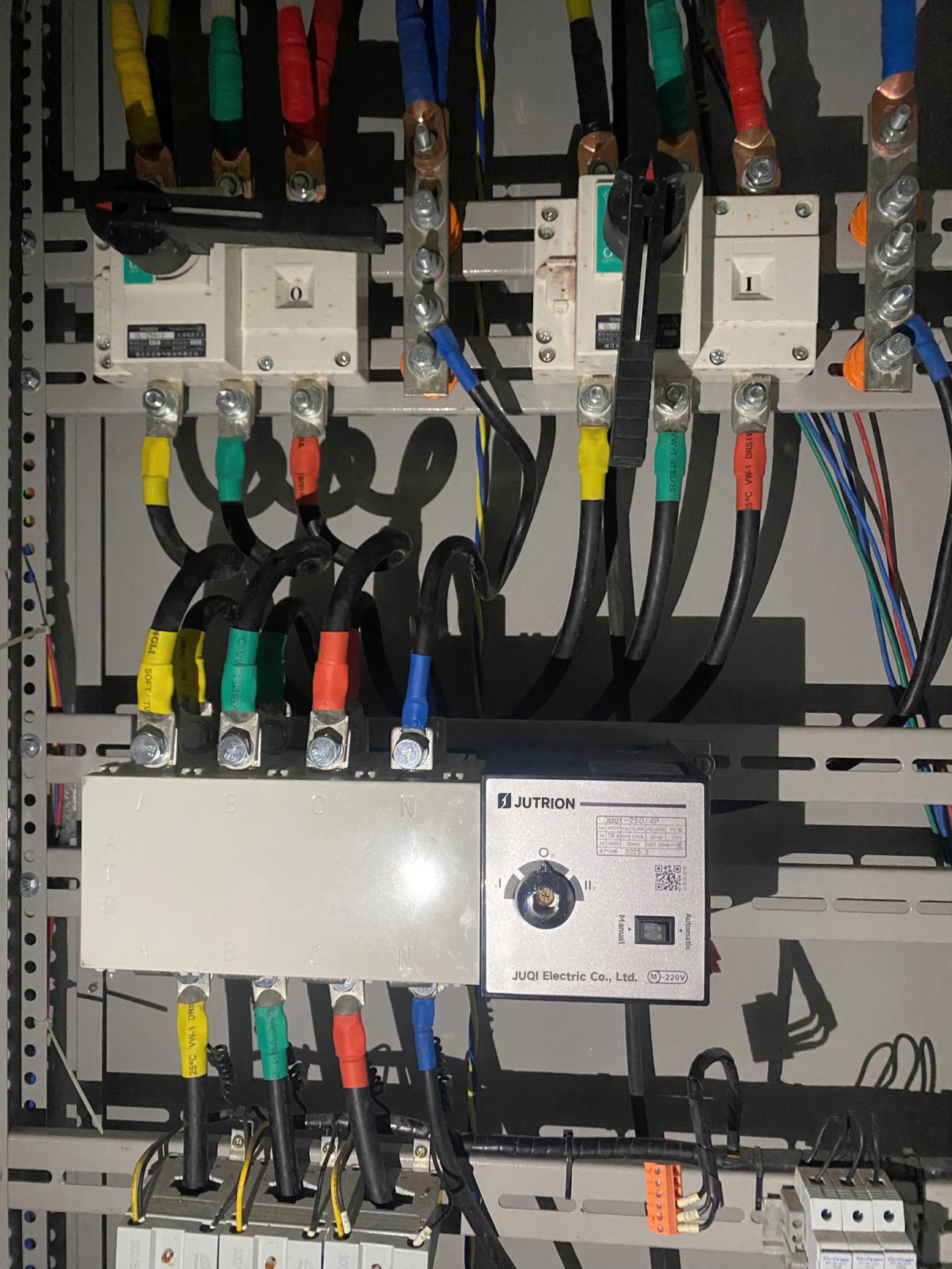 | 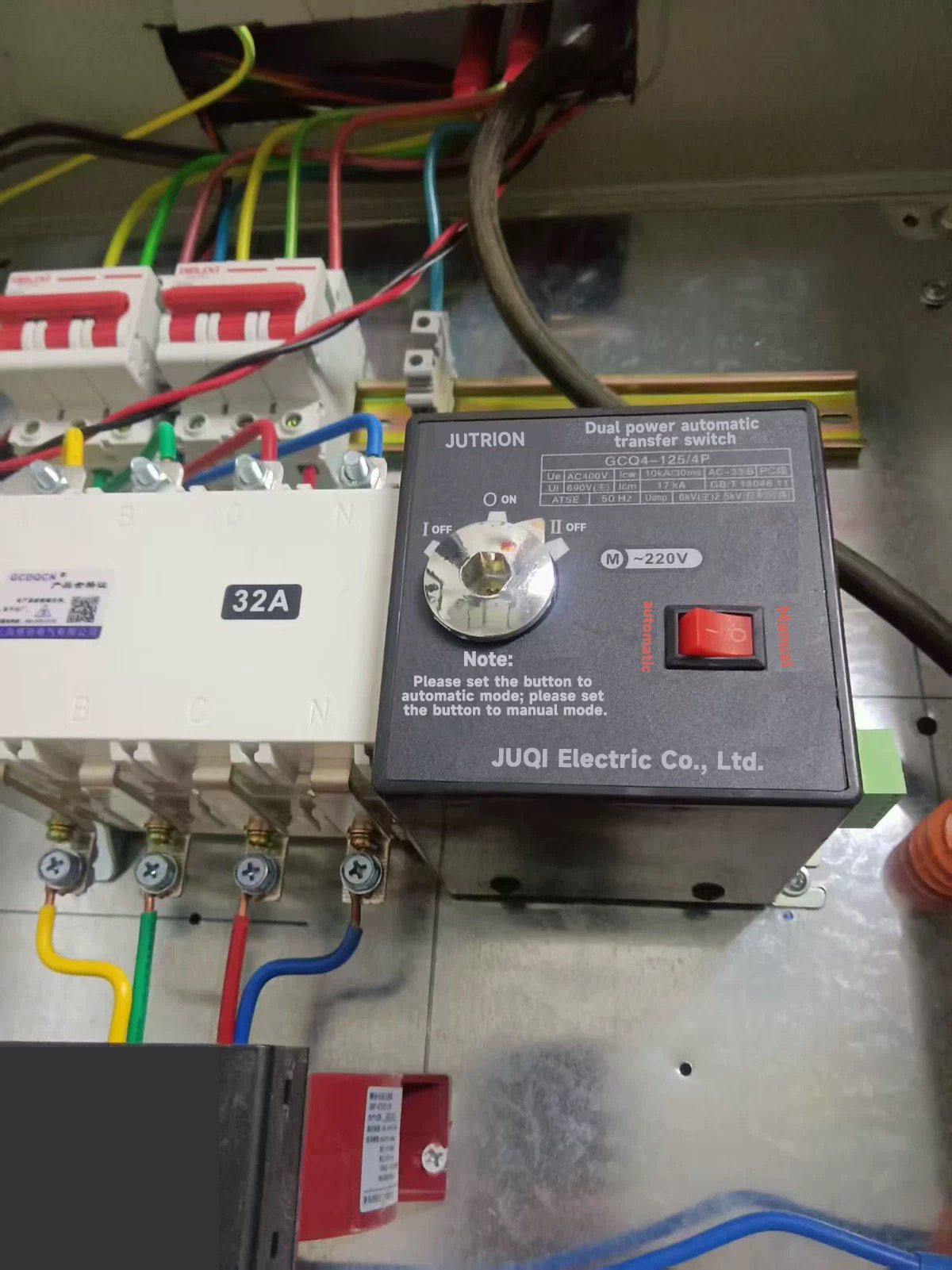 | 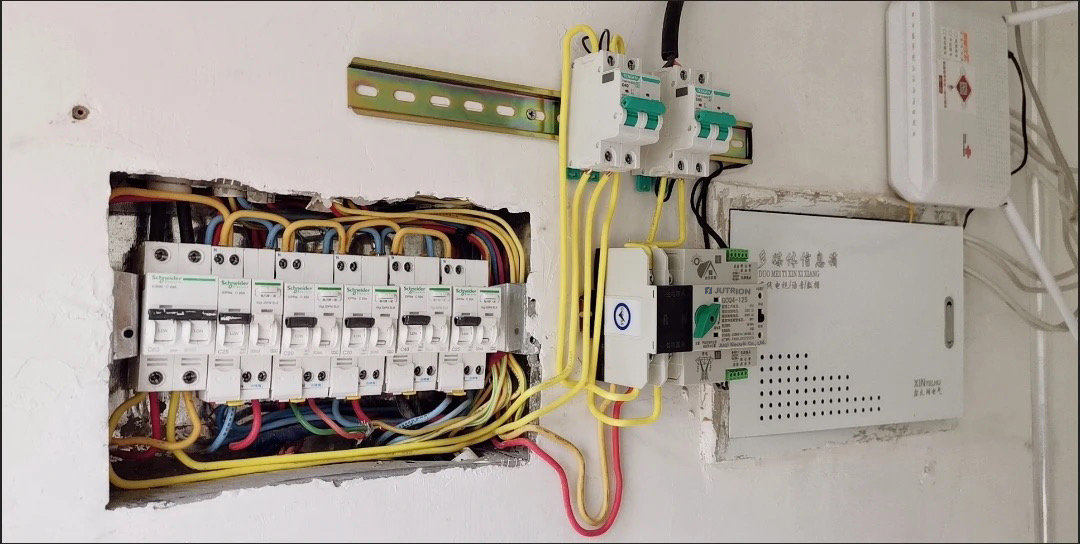 |
Different applications place different priorities on ATS performance.Residential buildings pay more attention to compact size, reliability, and economic efficiency.Commercial buildings emphasize power supply continuity and fast switching capability.Industrial and renewable energy systems require higher standards in current rating, system compatibility, and long-term operational stability.Therefore, in practical projects, the type and specifications of ATS should be reasonably selected according to the load type, power supply structure, and system scale.It should also be coordinated with protection devices such as MCCB and ACB to build a safe, reliable, and stable power distribution system.
Key Points for Selecting Automatic Transfer Switch (ATS)
PC class and CB class Automatic Transfer Switches differ in functional positioning.The former focuses on power switching functions and needs to be used together with upstream protection devices, while the latter uses circuit breakers as the switching mechanism and provides both power transfer and protection functions.CB class ATS is suitable for application scenarios with higher requirements for system safety.
PC class Automatic Transfer Switches are characterized by compact structure, fast switching speed, and controllable cost.They are suitable for scenarios where short-circuit protection requirements are not high but clear requirements for power supply continuity exist.This type of ATS usually does not have the ability to break short-circuit current and needs to be used together with upstream circuit breakers.It is suitable for power switching between utility power / utility power or utility power / generator.It is a common choice in residential and small to medium-sized commercial projects.
CB class Automatic Transfer Switches usually use circuit breakers as the switching execution mechanism and have higher short-circuit breaking capability.They are suitable for power distribution systems with higher requirements for system safety and protection performance.
Compared with PC class ATS, CB class products are higher in structure and cost, but the system integrity is stronger.They are used in key load scenarios such as large commercial complexes, data centers, hospitals, and industrial plants.They can provide necessary short-circuit and overload protection functions while performing power transfer.They are suitable for high-current and large-capacity power distribution systems.
FAQ:
Q: How long does it take for an ATS to switch between two power sources? |
A: The switching time of an ATS usually ranges from milliseconds to a few seconds, depending on the product structure, control method, and system configuration. |
Q: Can ATS be used in residential photovoltaic systems besides distribution cabinets used in engineering projects? |
A: Yes. In addition to industrial and commercial power distribution systems, ATS can also be used in residential photovoltaic or energy storage systems. |
Q: How should the rated current and power of an ATS be selected? |
A: The rated current is usually selected as 1.2–1.25 times the total load current, leaving about 20% margin. For example, if the load current is 30A, a 40A ATS can be selected. For a total power of 100 kW, the corresponding frame can be selected by converting it into current. |
Q: Can two power sources with different voltages be used together? |
A: No. If the voltages of the two power sources are inconsistent, it may cause mutual impact and produce large circulating currents, resulting in overheating, short circuits, and even damage to switches and equipment. |
Q: Will the equipment be damaged if both power sources are energized at the same time? |
A: No. If both power sources are energized, the system will normally prioritize the main power supply. Only when the main power fails will it automatically switch to the backup power supply. When the main power recovers, it will switch back to the main power source. Therefore, there is no need to worry if both power sources have power at the same time. |
-
What Is a Surge Protective Device?
2025-12-29 11:05:09 -
How Can a Miniature Circuit Breaker Achieve Remote ON/OFF Control?
2025-12-29 11:05:09 -
How to Select the Right AC Contactor for Electrical Systems?
2025-12-29 11:05:09 -
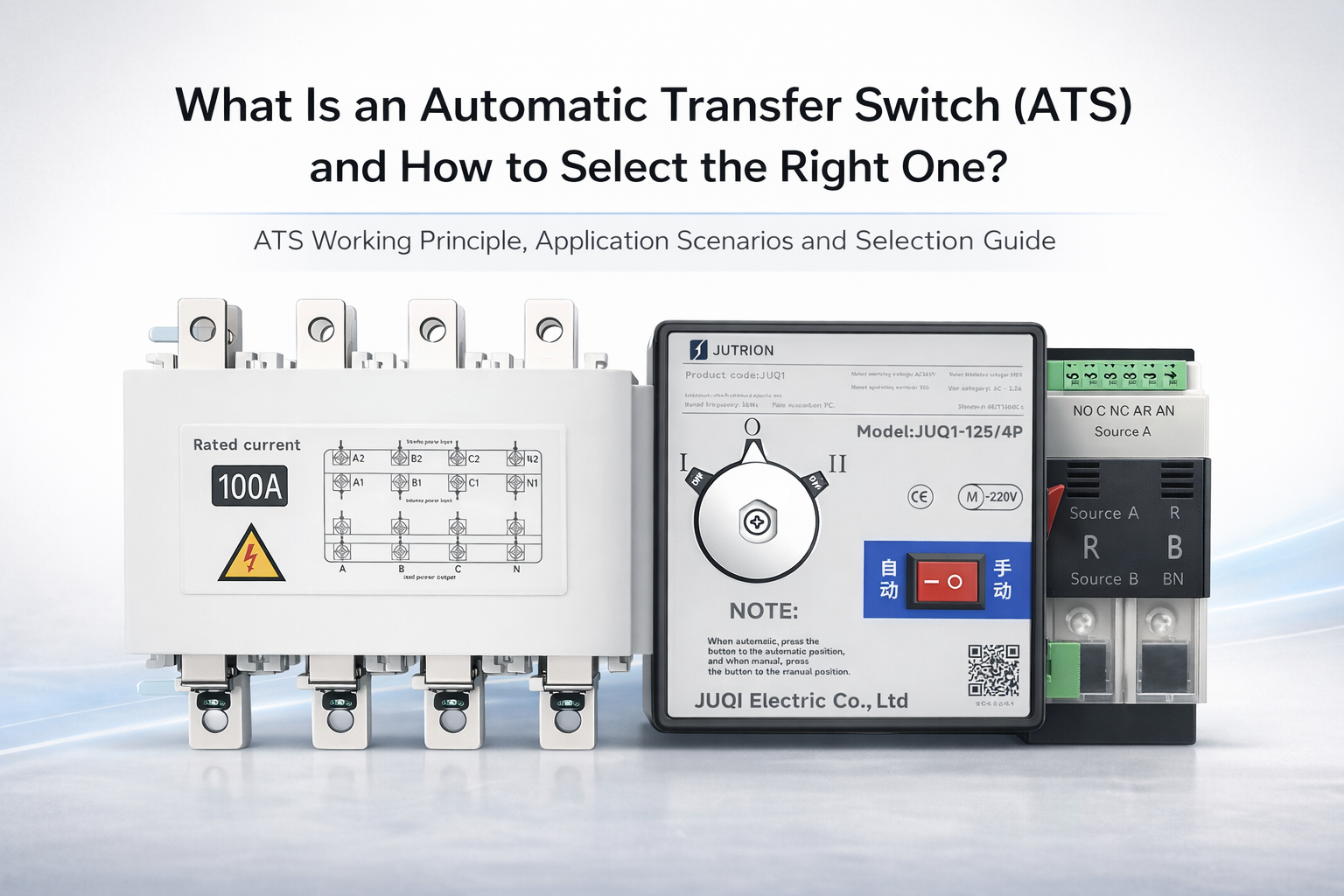
What Is an Automatic Transfer Switch (ATS) and How to Select the Right One?
2025-12-29 11:05:09 -
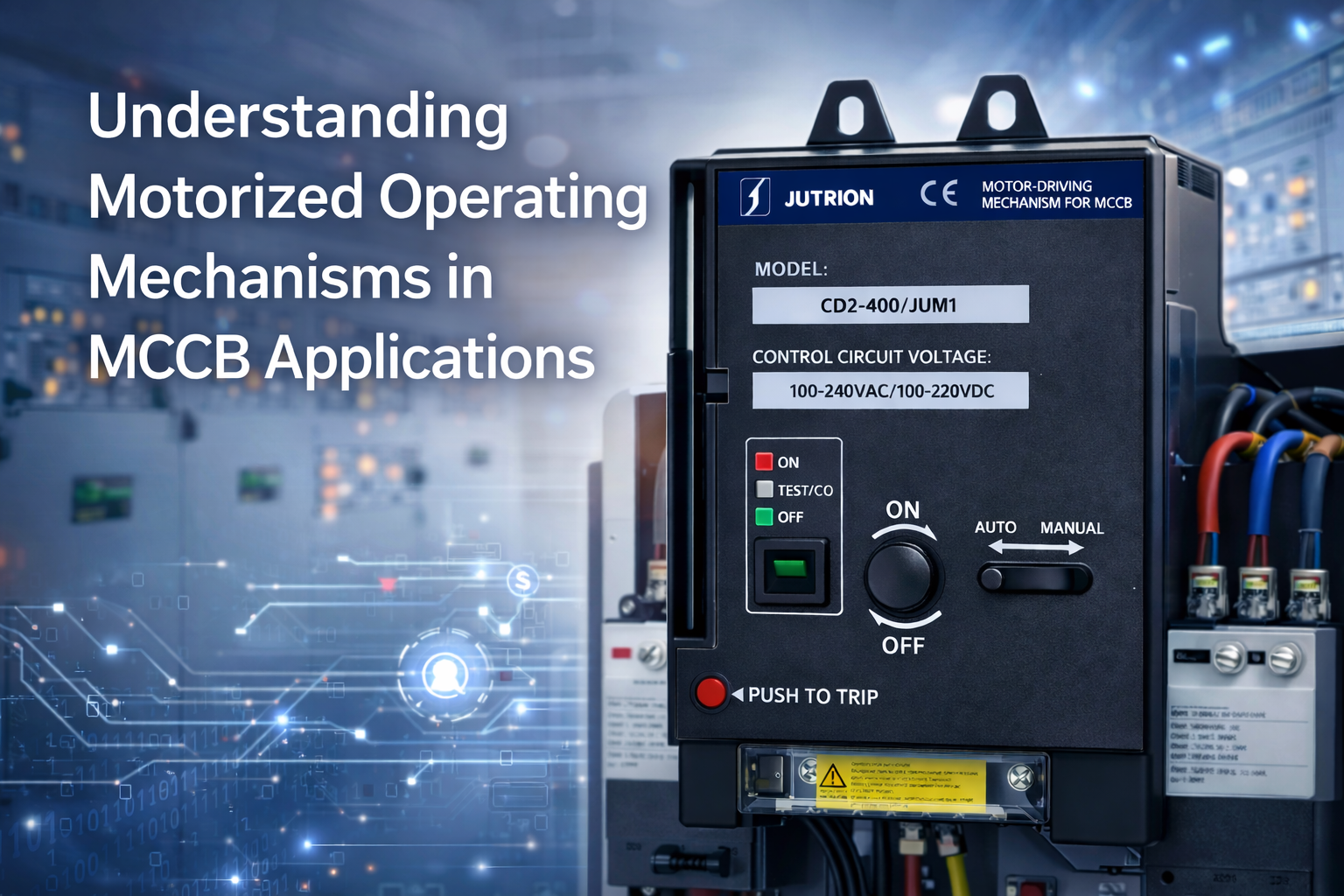
Understanding Motorized Operating Mechanisms in MCCB Applications
2026-01-24 22:19:02