

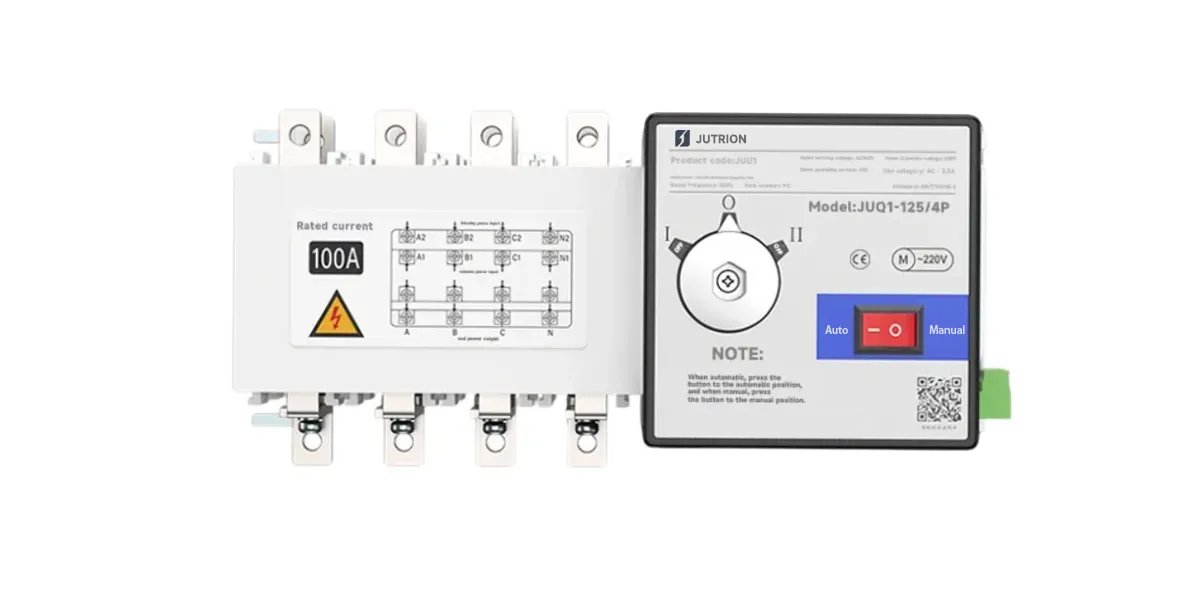
PC Class Automatic Transfer Switch (ATS) for Dual Power Supply Systems
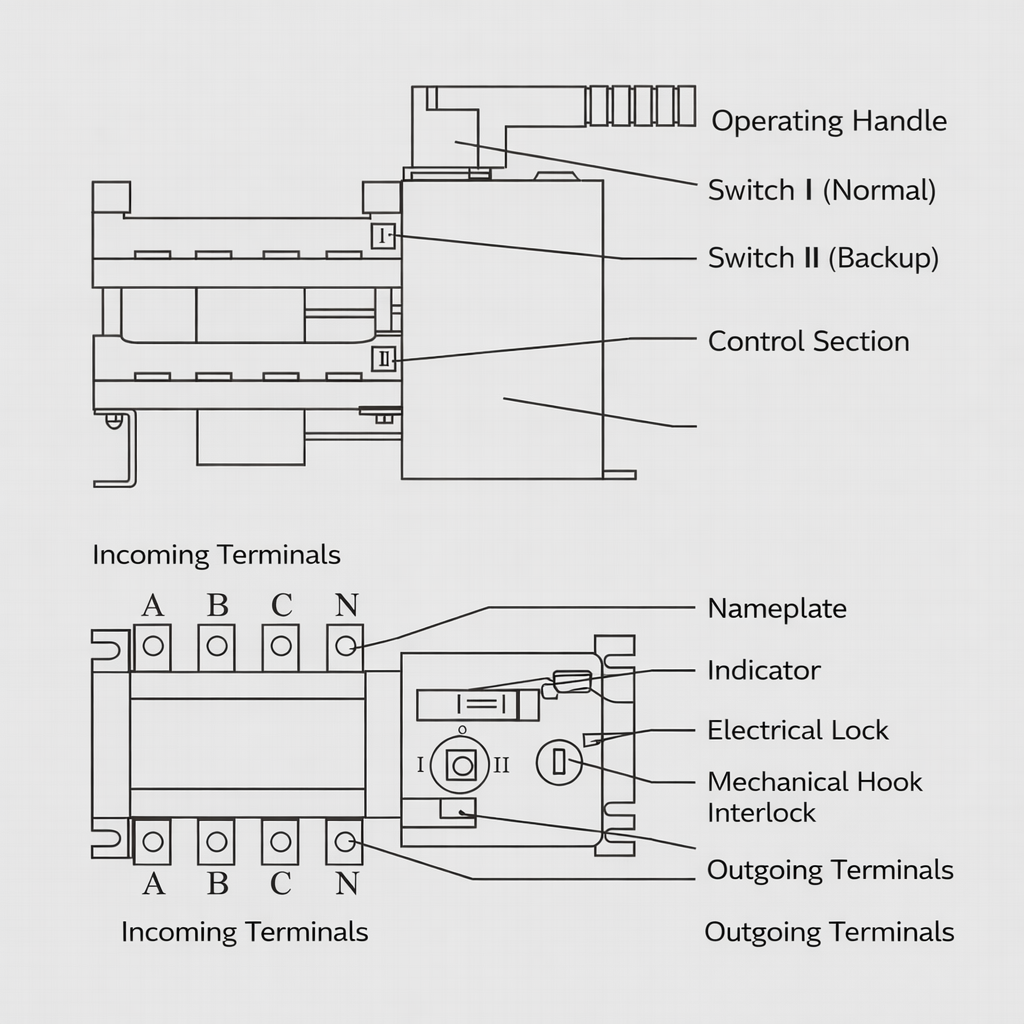
JUTRION PC Class Automatic Transfer Switch adopts an integrated design with both mechanical and electrical interlocking, preventing the two power sources from being connected in parallel and ensuring safe and reliable operation. This product does not provide overload or short-circuit protection by itself and should be used together with an upstream circuit breaker.
When the main power supply has abnormalities such as voltage loss, undervoltage, or phase loss, the switch can quickly and automatically transfer the load to the backup power supply. After the power supply is restored, it can automatically return after a delay.
Product Advantages
High Safety:
Integrated structure with mechanical and electrical dual interlocking prevents two power sources from being connected in parallel and helps avoid short-circuit accidents.
Strong Impact Resistance:
Can withstand high current in a short time. The contacts have high voltage resistance and are not easy to weld, making the switch suitable for long-term stable operation.
Low Failure Rate and Durability:
No built-in overload or short-circuit trip unit. The structure is simple, reducing misoperation and extending service life.
Fast Switching Speed:
Integrated structure with a pure switching mechanism, no tripping action, and no unnecessary movement.
FAQs
Q: PC Class ATS does not have short-circuit protection. What should be done if a short circuit occurs?
A: PC Class ATS itself does not provide short-circuit or overload protection. Short-circuit protection is handled by the upstream circuit breaker, air switch, or MCCB. During the very short time before the upstream switch trips, the PC Class ATS can withstand the short-circuit impact without contact welding or burning out.
Q: Why is PC Class ATS usually considered more reliable?
A: PC Class ATS is a dedicated integrated transfer switch. It does not have overload or short-circuit trip units, which means fewer components that may fail or cause false tripping. Its structure is simple and precise, making it less likely to fail.
Q: What does “pole number” mean? Should I choose 3P or 4P?
A: 3P switches only the three phase lines L1/L2/L3, while the neutral line N remains connected and is not switched. 4P switches all three phase lines plus the neutral line, providing complete isolation of all four conductors.