


Which SPD (DC Surge Protective Device) Should Be Installed Upstream of a Solar Inverter?
Many contractors and installers initially do not pay special attention to DC-side surge protection. A high-power solar inverter can easily cost several thousand dollars, but during thunderstorm season, a single millisecond-level surge on the DC side can cause instantaneous carbonization of its circuit boards. Many contractors only realize the crucial importance of upstream protection when the inverter manufacturer voids the warranty citing "failure to install a qualified surge protector."
Why Must Solar PV Systems Use Dedicated "DC" SPDs?
In solar PV projects, many new electricians or inexperienced solar installers make a highly dangerous mistake: they assume that installing an AC SPD alone provides complete lightning protection for the entire system. This is actually a fatal misunderstanding.
When an AC SPD is installed at the inverter's output, it can only block surges originating from the grid side. If lightning strikes the PV modules on the roof, the violent surge will travel directly from the DC side into the inverter. The AC SPD is completely powerless against this. The inverter will absorb the full impact of the overvoltage, resulting in burnt motherboards at best, or sparking a fire at worst.
DC Surges vs. AC Surges
There is a fundamental physical difference between Direct Current (DC) and Alternating Current (AC). AC has a "zero-crossing point" (the voltage periodically drops to zero, allowing arcs to extinguish naturally). However, the DC power generated by the PV array is a continuous high voltage with no zero-crossing.
Once a surge occurs, a standard AC SPD is simply unable to extinguish the sustained DC arc (Arcing), causing the SPD itself to explode and catch fire. Therefore, the DC side must—and can only—use dedicated Photovoltaic DC SPDs equipped with specialized internal "DC arc-extinguishing devices."
Feature | AC-Side SPD | DC-Side PV SPD |
Operating Voltage | Suitable for 220/380V AC | Suitable for 600V / 1000V / 1500V DC ,etc. |
Continuous Operating Voltage | No need to consider long-term DC bias | Must be ≥ 1.2 × the PV array open-circuit voltage (Voc) |
Arc Extinguishing Capability | Relies on AC zero-crossing to extinguish the arc | Requires a dedicated DC arc suppression design |
Protection Mode | L-PE、N-PE、L-N | + to PE, − to PE positive/negative pole-to-ground protection |
3 Essential Features for an Upstream Inverter SPD
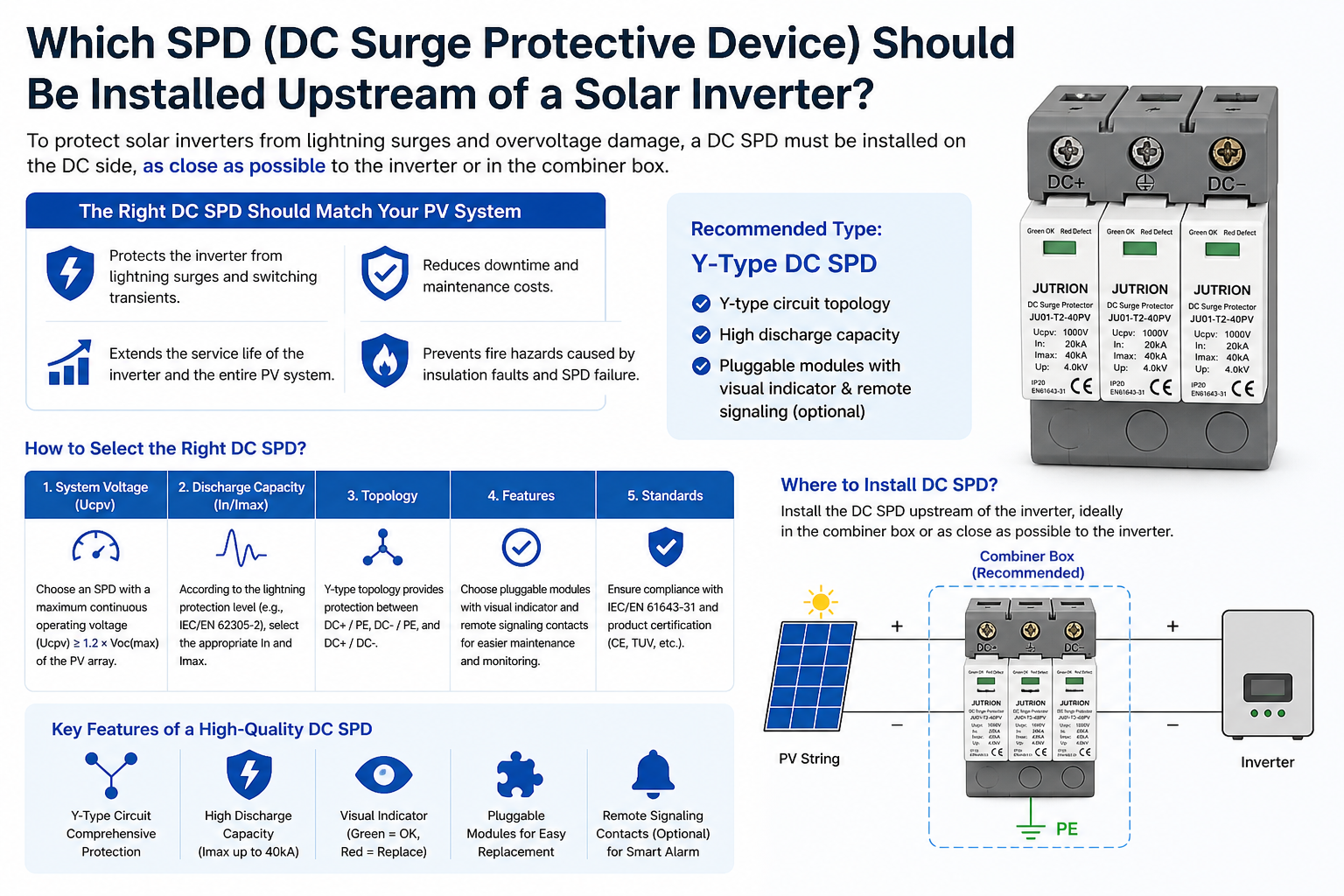
Once you understand the absolute necessity of using a DC SPD, how do you choose the right physical device from the market? Because it is installed directly upstream of the expensive inverter, the ideal DC SPD must possess the following three core design features:
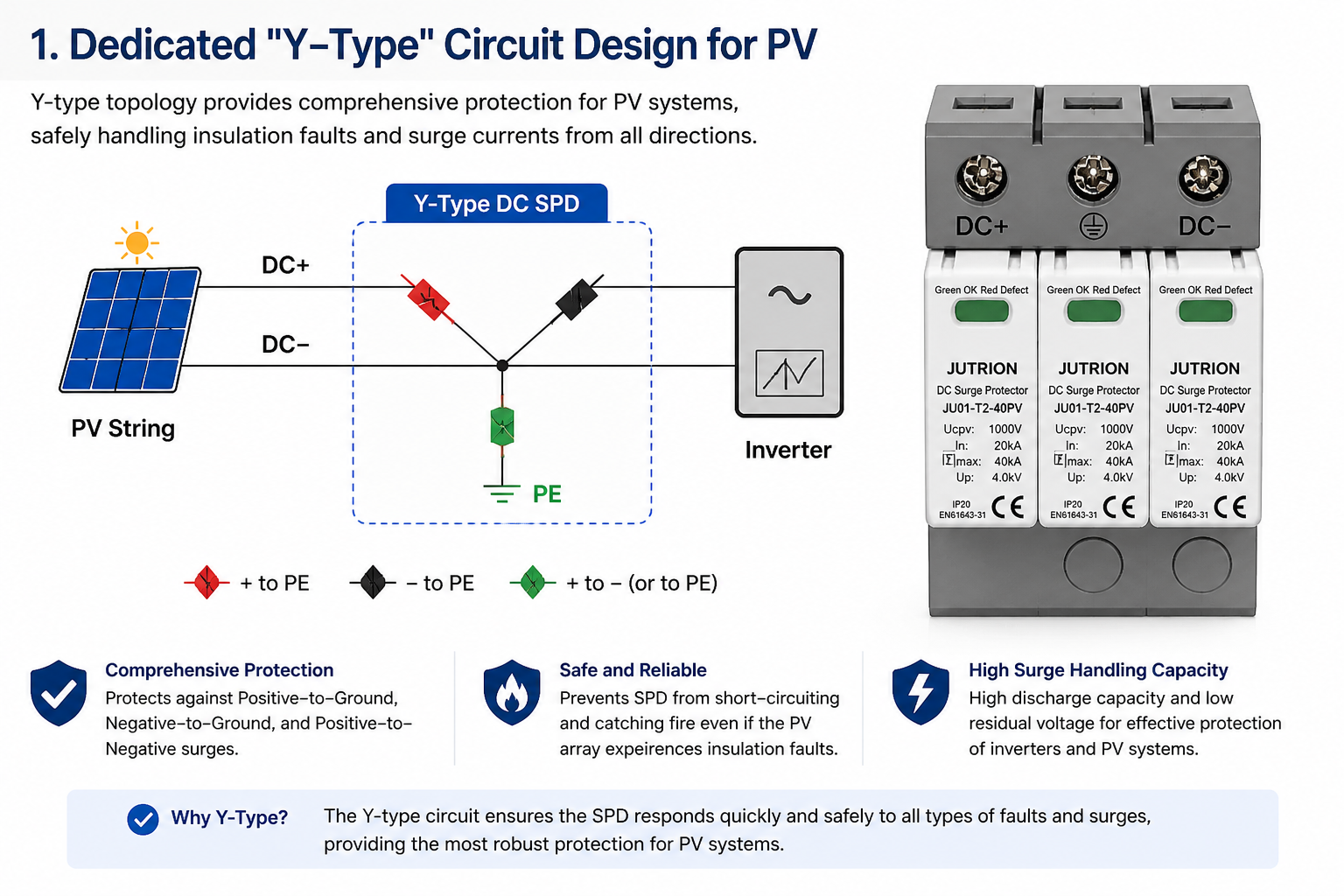
1. Dedicated "Y-Type" Circuit Design for PV
Standard surge protector architectures cannot safely handle insulation faults in solar systems. A qualified upstream PV SPD must utilize a high-safety "Y-type" topological structure internally (providing protection from Positive-to-Ground, Negative-to-Ground, and Positive-to-Negative). This design not only safely discharges surge currents from all directions but also prevents the SPD itself from short-circuiting and catching fire if the PV array experiences a ground fault.
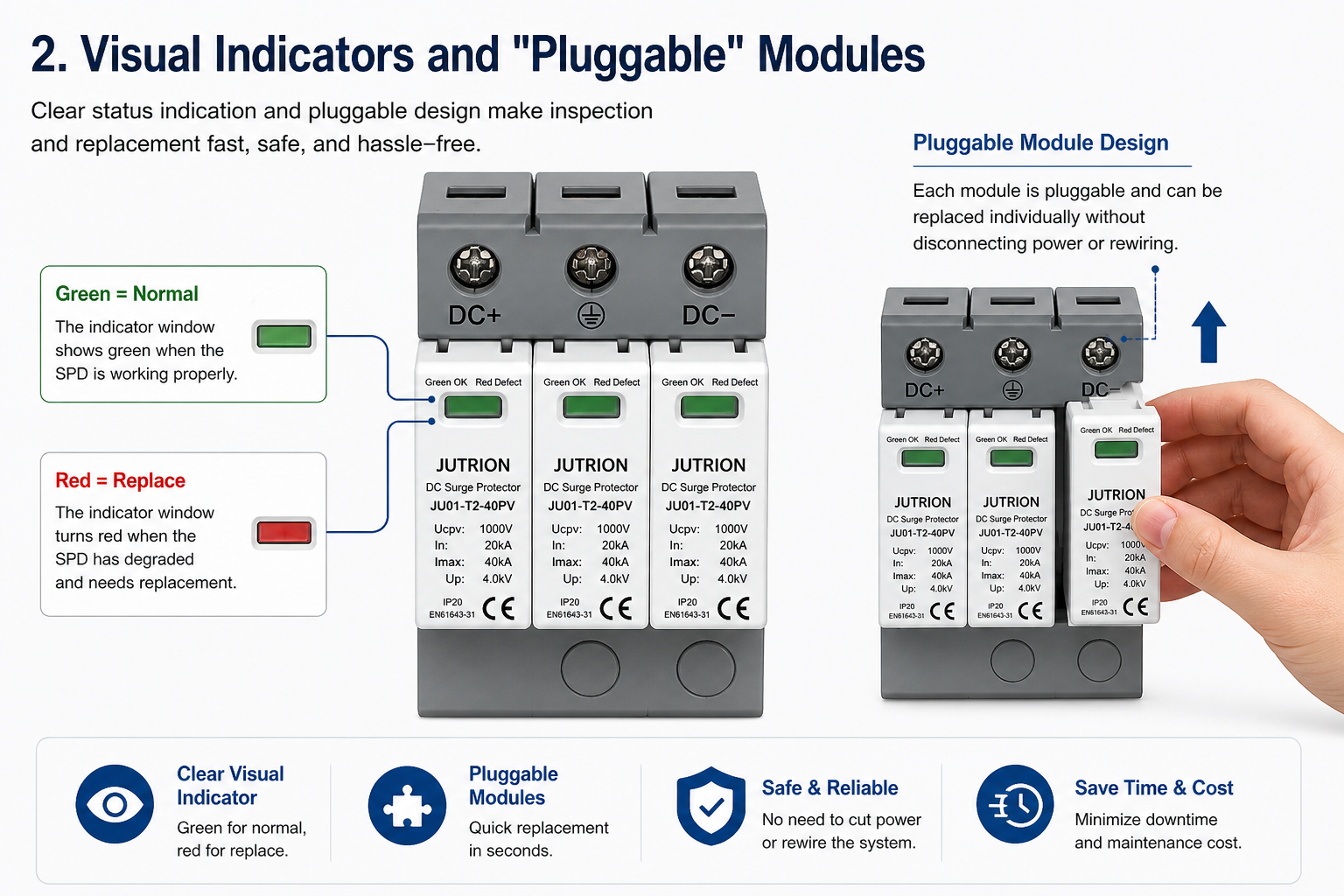
2. Visual Indicators and "Pluggable" Modules
Solar inverters are typically installed outdoors, on rooftops, or in remote, unattended areas. After an SPD sacrifices itself to block a surge, its internal MOV (Metal Oxide Varistor) degrades. Therefore, it must feature a clear visual indicator window (typically Green for normal, Red for replace) and a "pluggable" module design. When maintenance personnel notice a failed unit, they don't need to cut the power or rewire the entire base—they can simply pull out the degraded module and plug in a new one in seconds.
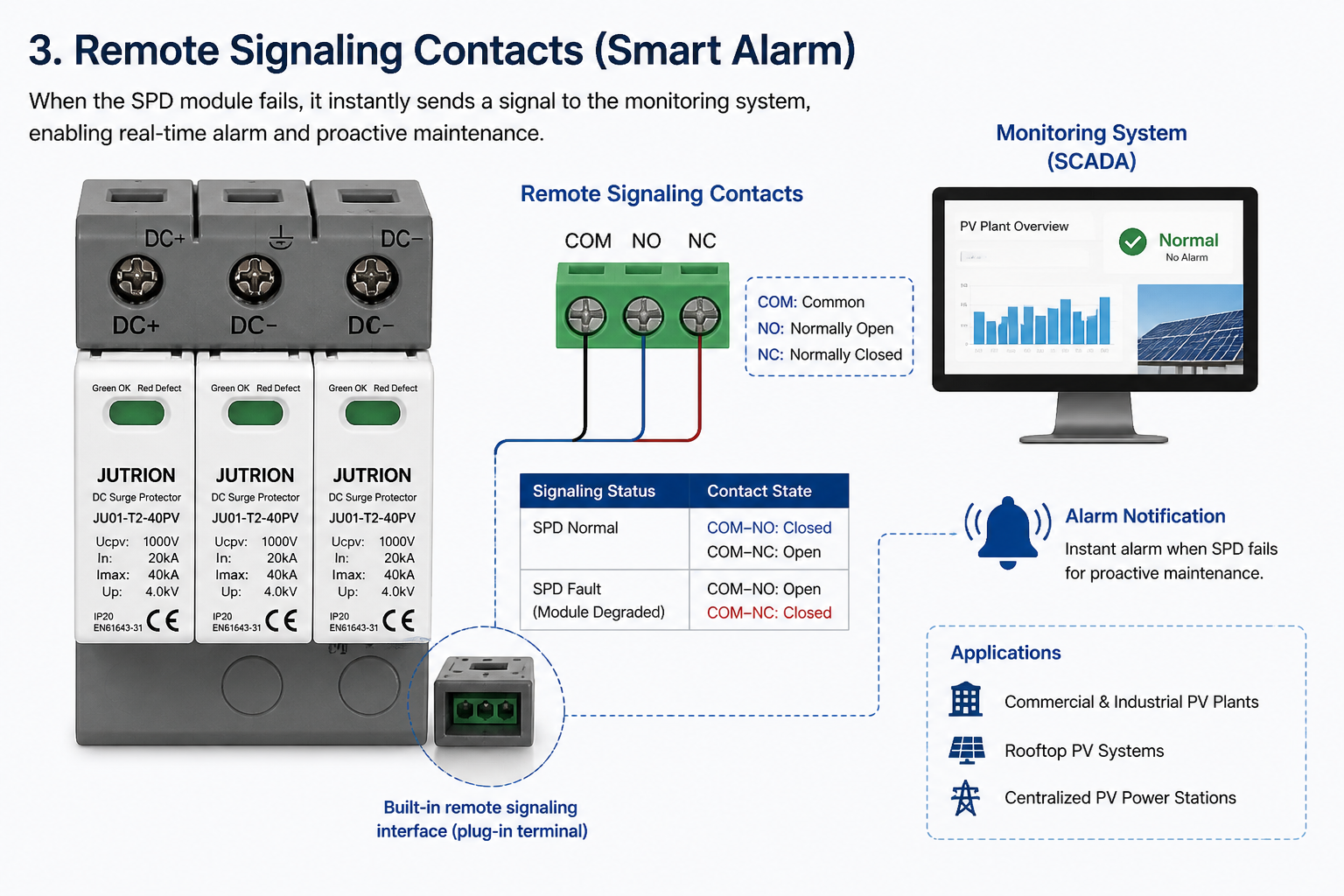
3. Remote Signaling Contacts (Smart Alarm)
High-power commercial inverters are usually integrated into smart monitoring systems (SCADA). A premium DC SPD will be equipped with remote signaling terminals. The moment a surge module fails, it instantly sends an electrical signal to the control room. Operations personnel will know immediately that the inverter has lost its front-line defense, allowing them to replace it promptly before the next lightning storm hits.
If you are looking for a reliable front-line defense that incorporates all these three essential safety designs, the [JUTRION JUU1 Series DC SPD] is engineered exactly for this purpose, offering both Type 2 and Type 1+2 options for various PV installations.
Frequently Asked Questions (FAQ)
Q: My inverter has built-in surge protection. Do I still need an external DC SPD?
A: Yes. Built-in SPDs are usually low-capacity and soldered to the motherboard. If a massive surge destroys them, the whole inverter needs an expensive factory repair. An external pluggable SPD takes the hit and is cheap and easy to replace.
Q: If I install a DC SPD, do I still need an AC SPD on the grid side?
A: Yes. The DC SPD only protects the inverter from surges originating from the solar panels. You must still install an AC SPD at the grid connection point to protect the inverter from voltage spikes caused by the utility grid or lightning striking nearby power lines.
Pro Tip from JUTRION Engineers: > Never install your DC SPD in a distribution box exposed to direct sunlight. Extreme internal temperatures can accelerate the aging of the MOV (Metal Oxide Varistor) components, significantly reducing the lifespan of your surge protector. Always ensure proper shading and ventilation for your solar combiner boxes.
-
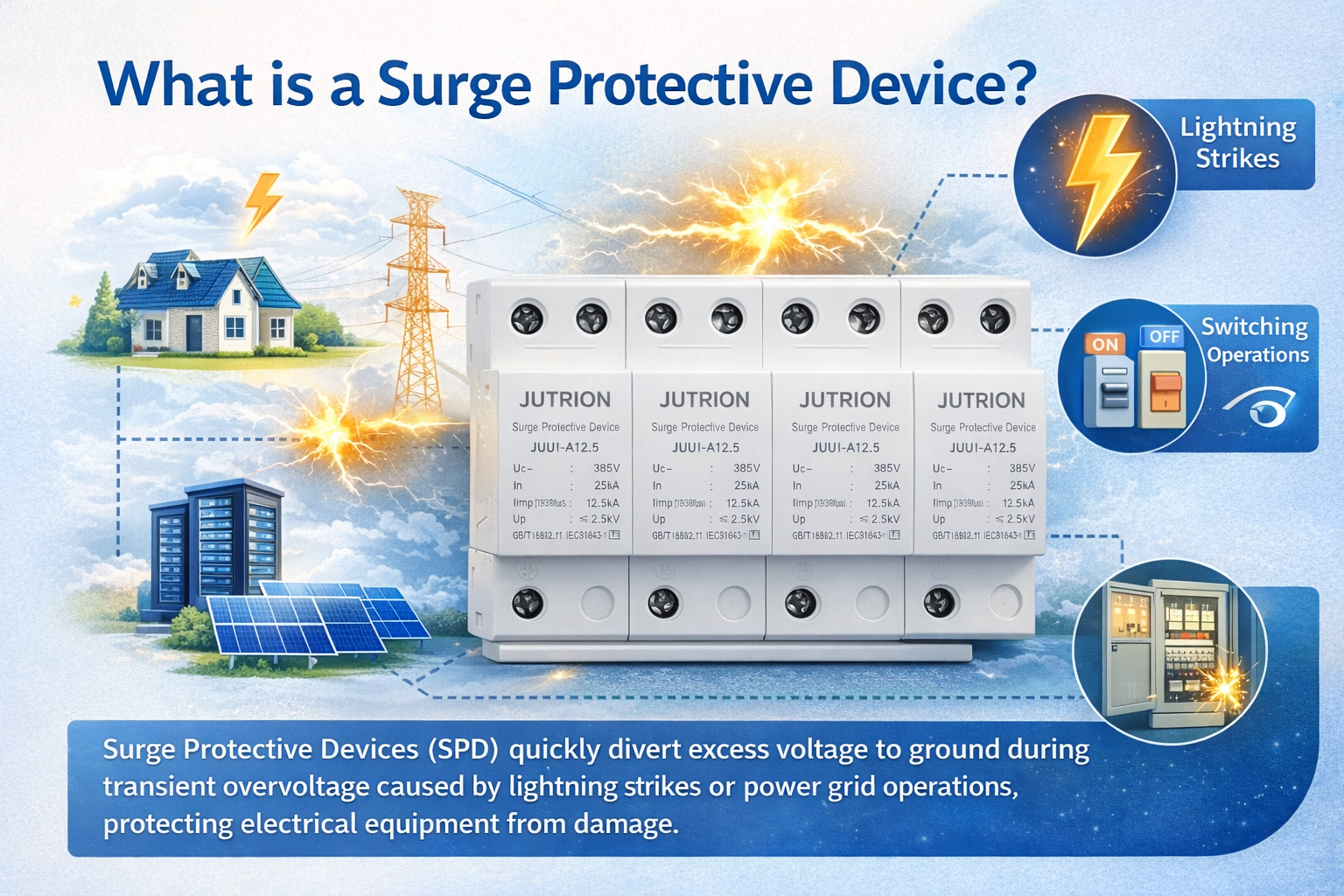
What Is a Surge Protective Device?
2025-10-29 11:05:09 -
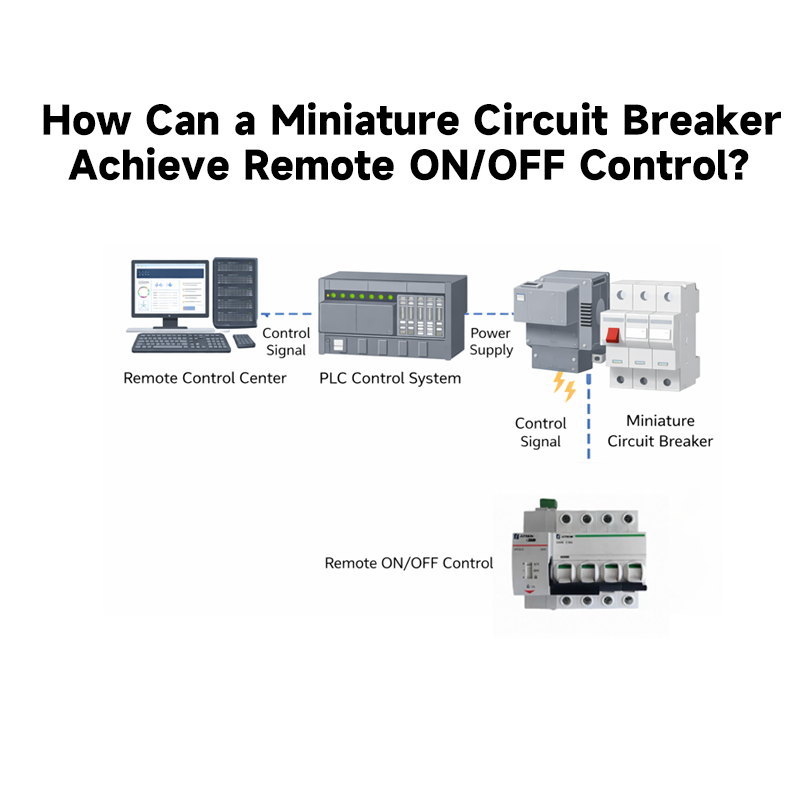
How Can a Miniature Circuit Breaker Achieve Remote ON/OFF Control?
2025-12-29 11:05:09 -
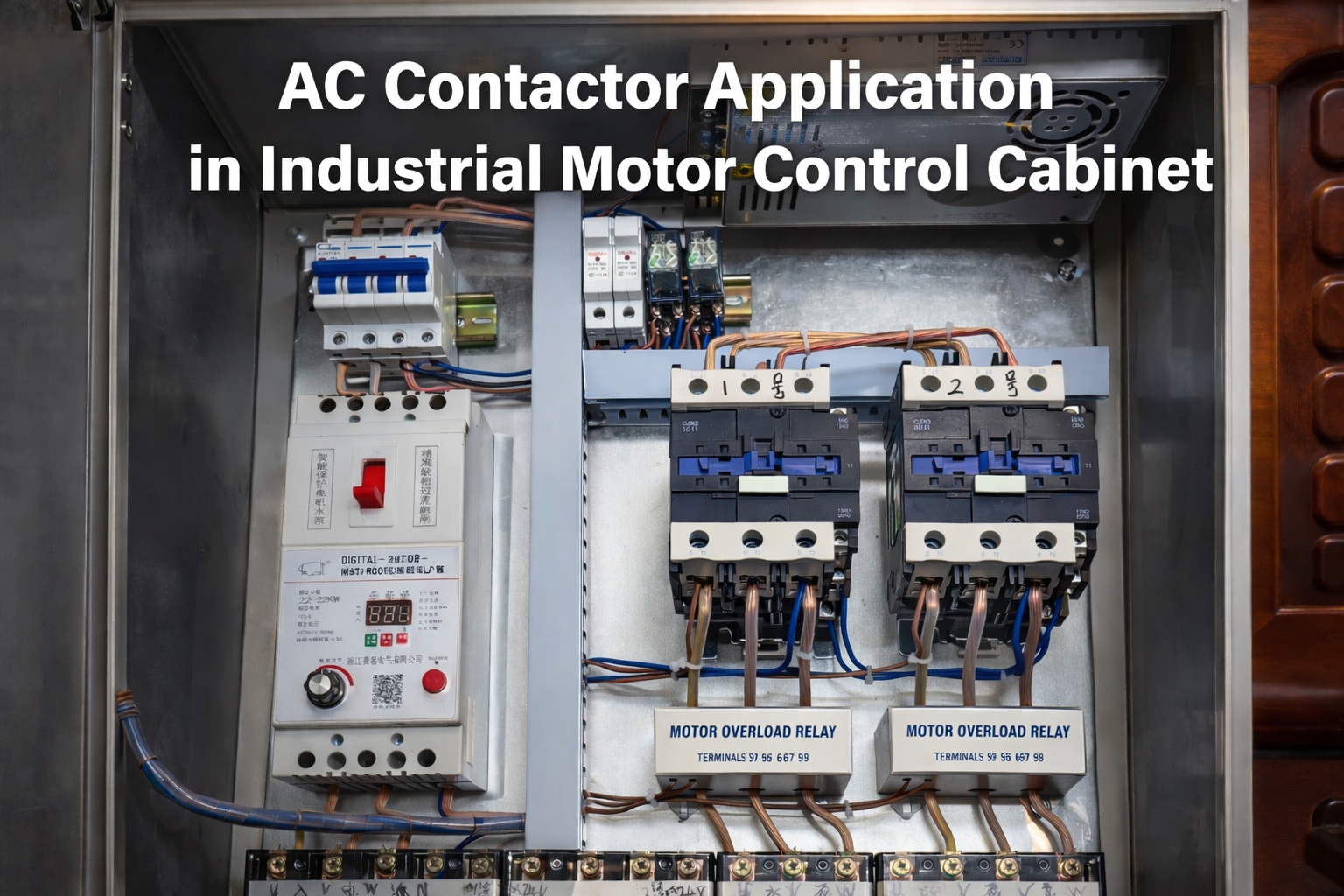
How to Select the Right AC Contactor for Electrical Systems?
2026-01-29 20:26:49 -
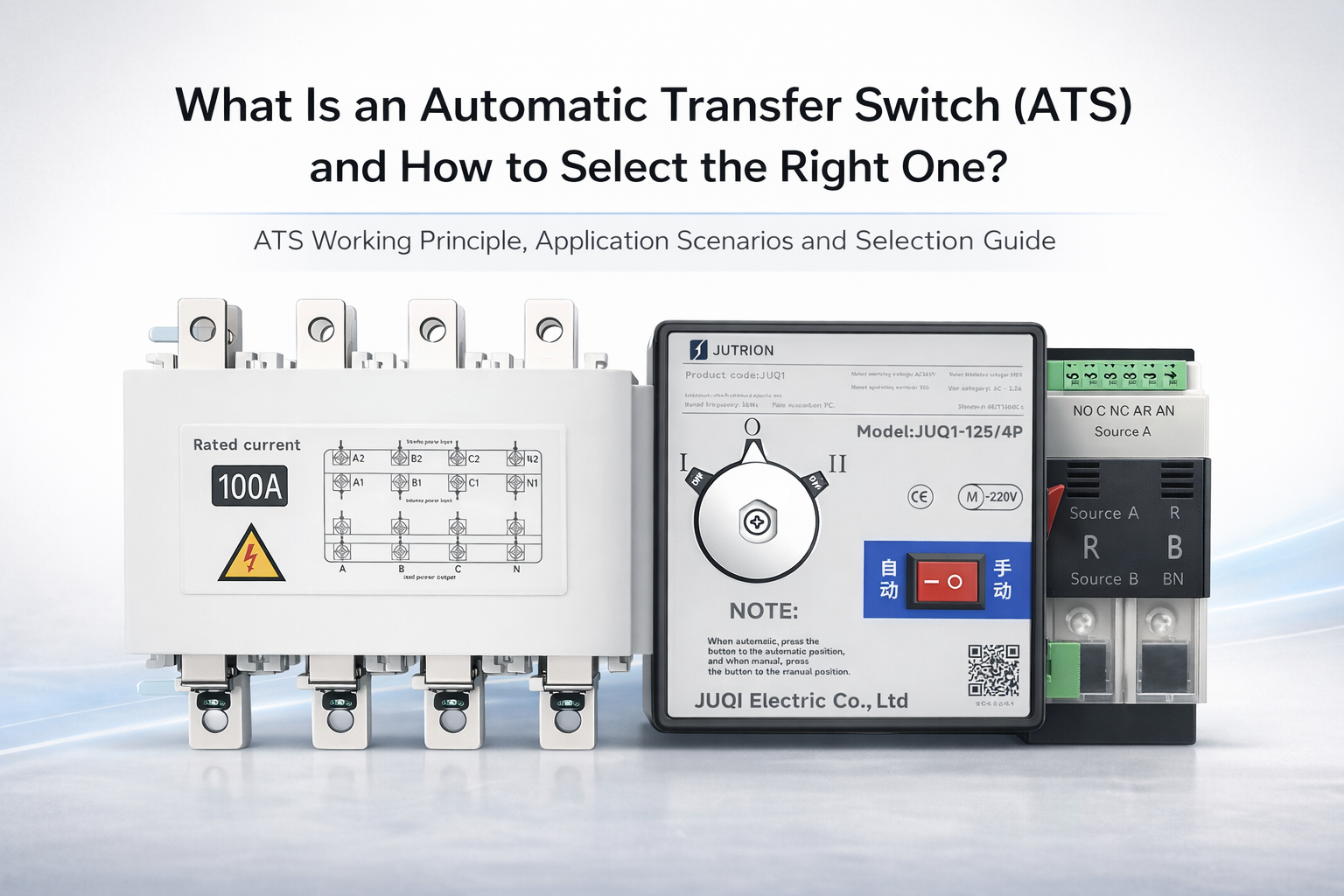
What Is an Automatic Transfer Switch (ATS) and How to Select the Right One?
2025-11-02 11:05:09 -
Which SPD (DC Surge Protective Device) Should Be Installed Upstream of a Solar Inverter?
2026-05-03 12:40:00